



Profile view of a bearded man wearing a black baseball cap and a dark gray T-shirt against a plain light background.

Furnace carbon monoxide signs in Washington

Step 1 of 3: Equipment

What are the signs of carbon monoxide from my furnace?

You caught a whiff of something or your furnace just doesn't seem right, and you want to know what to watch for before it turns into something serious. A furnace that's leaking carbon monoxide won't always announce itself, which is exactly why people in your position start checking for signs rather than waiting to find out the hard way.

Soot near the furnace, a yellow flame instead of blue, and headaches that ease when you leave the house

A furnace burning gas correctly shows a steady blue flame. If it's flickering yellow or orange, the fuel isn't burning clean and carbon monoxide is a likely byproduct. Streaks of soot around the furnace cabinet or vent, excess moisture on nearby windows, and a stale or burning smell are other signs the exhaust isn't venting the way it should. Because carbon monoxide has no smell of its own, the clearest clue is often how you feel: headaches, dizziness or nausea that show up when the furnace runs and fade once you're outside. Washington winters mean the furnace runs for months at a stretch, so a venting problem gets more hours each day to put gas into the air you're breathing.

A smiling man in a gray long-sleeved shirt stands in a kitchen looking to the side, with open shelves of dishes, a white mug on the counter, a potted plant, and a view through a doorway into a living room.
A smiling bearded man in a green sweater sits at a white marble kitchen island with a mug, potted plant and bowl of fruit, in a bright white interior with open shelving and an arched doorway.
A smiling man with dark curly hair and a beard, wearing a dark green knit sweater, stands at a white marble kitchen counter with a dark blue mug, with open shelving, pendant lights and a houseplant behind him.
A smiling man in a green ribbed sweater stands behind a wooden table holding a ceramic mug of coffee in a kitchen with white subway tile, shelves of potted plants, and a bowl of fruit.

What would you actually notice if this were happening?

Streaking or a brownish stain around the furnace cabinet or the vent pipe. A burner flame that's yellow or flickering instead of steady blue. Soot around the panel. Rooms near the furnace running warmer or stuffier than usual, or a closet smell you can't place. In people, it shows up as headaches, dizziness, or feeling sick in a way that gets better once you leave the house and comes back when you return. Pets acting sluggish for no clear reason are worth paying attention to as well. Since most homes here heat with electricity, a gas furnace throwing any of these signs is worth taking seriously rather than waiting out. Left unchecked, it puts everyone breathing that air at risk.

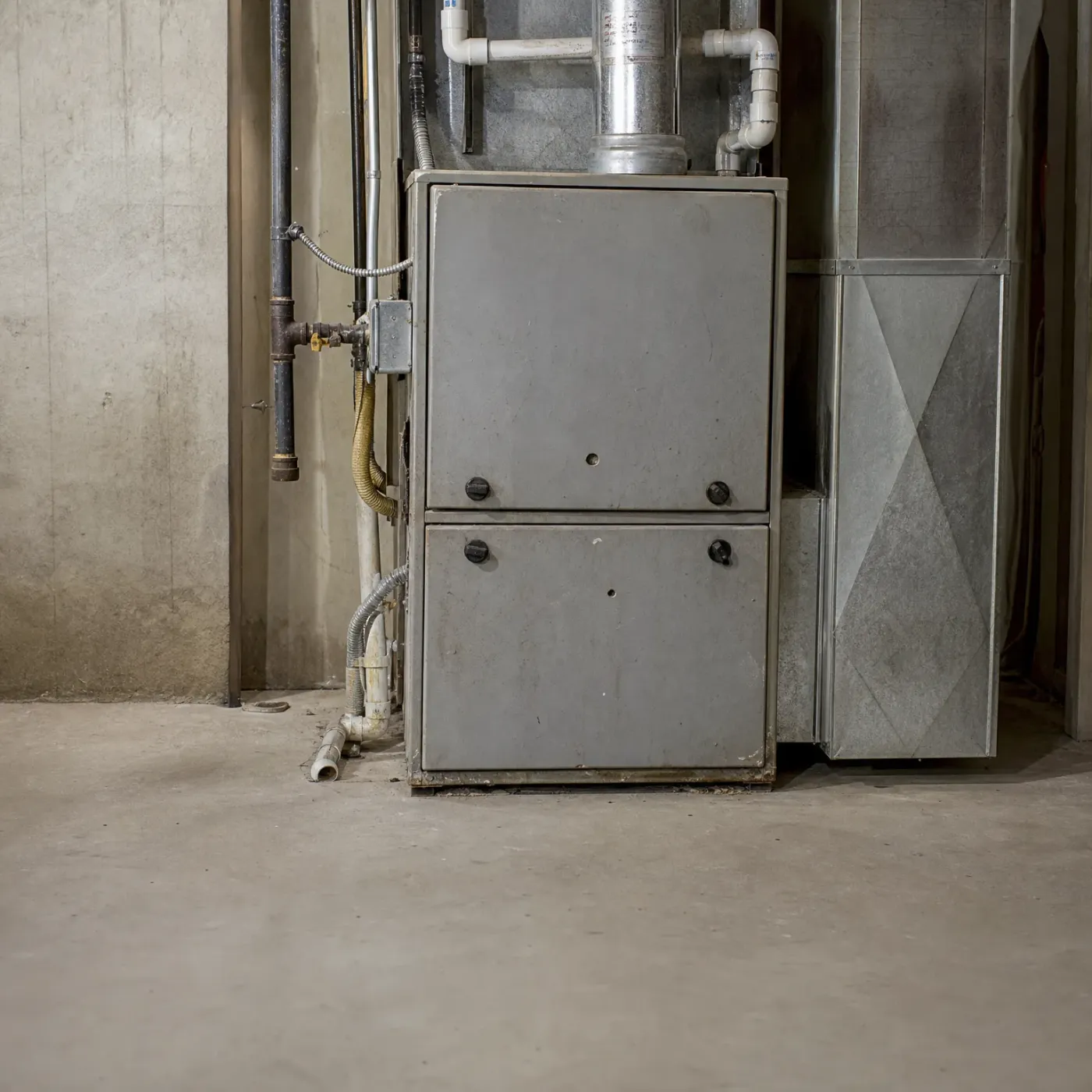
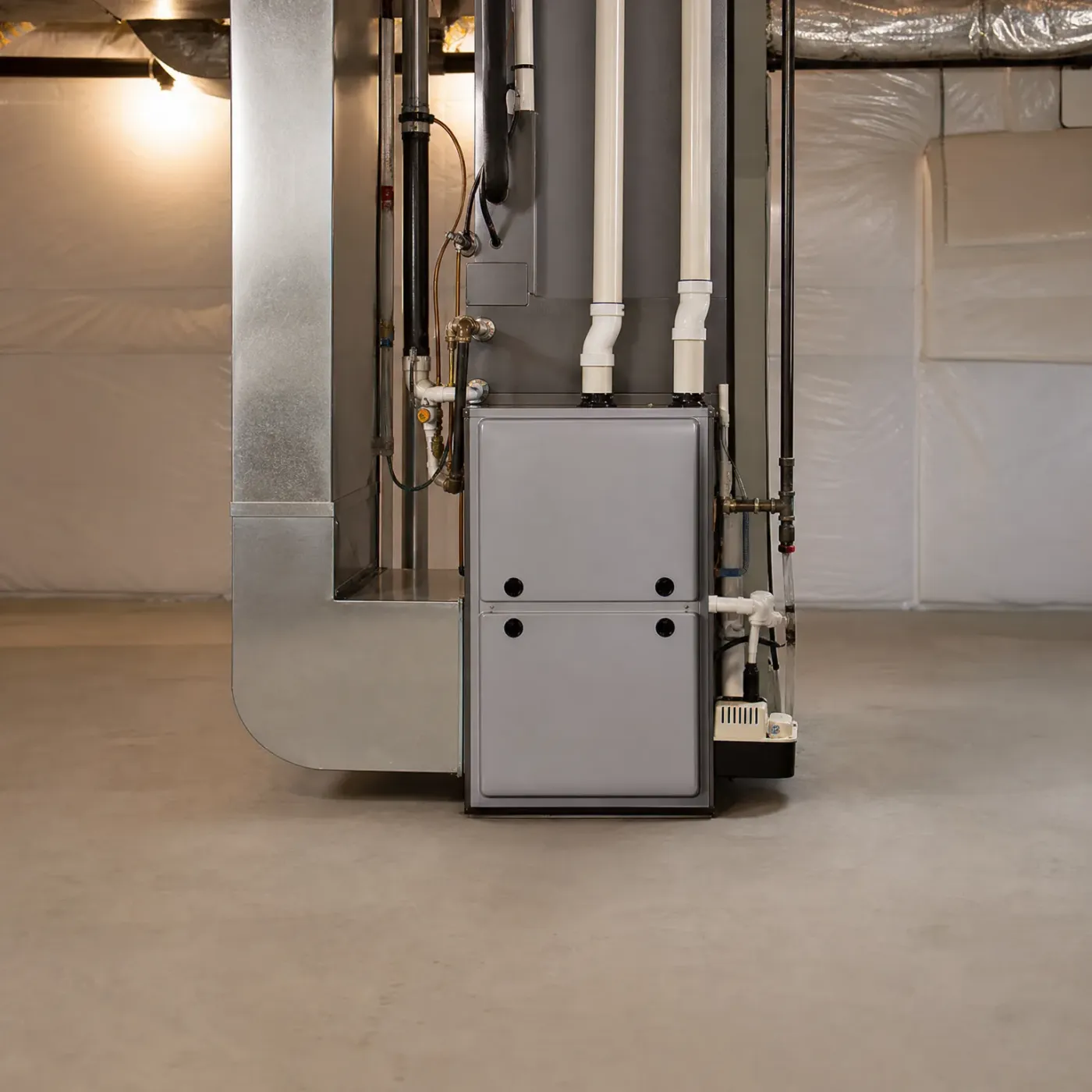
A gray high-efficiency furnace in a basement with white PVC vent pipes, sheet-metal ductwork, copper and black piping, a condensate pump, and insulated walls above a concrete floor.

The flue venting the way it should

That round metal flue rising to the ceiling is carrying exhaust out of the house. A furnace venting correctly keeps that air moving up and out, not back into the basement. No soot around the panels, no stain on the pipe, flame steady behind the access door.
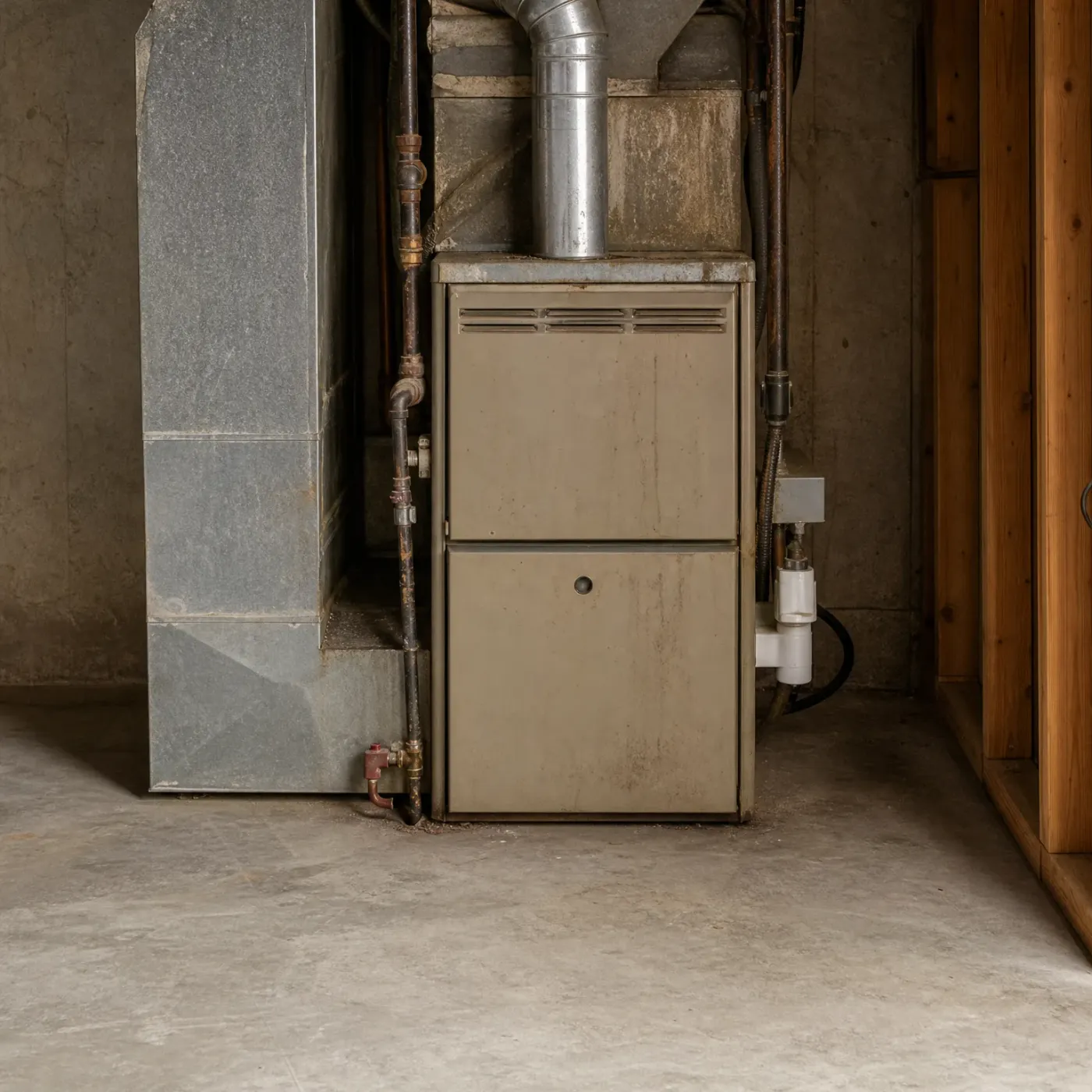
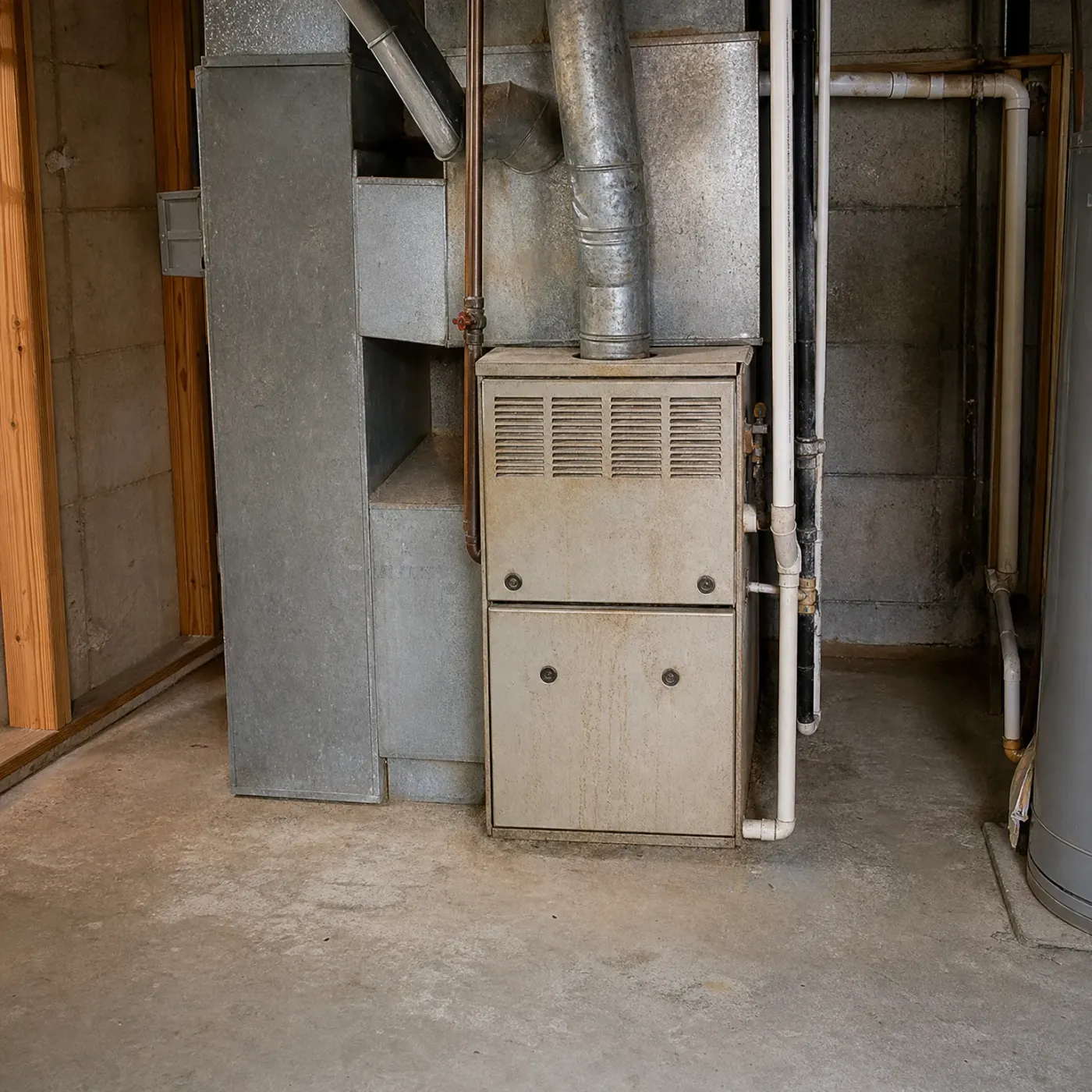
A beige residential furnace stands on a concrete basement floor beside galvanized sheet-metal ductwork, a round flue pipe, copper gas piping, and a PVC condensate line, with a wood-paneled wall at right.

An older unit worth a second look

This furnace has some age on it and light grime on the cabinet. Copper and iron gas lines, a flexible conduit, a flue that's been there a while. None of that means trouble by itself, but it's worth having someone check the vent and the burner before winter.

Get It Checked or Wait It Out

Call Today

  • A gas furnace puts off carbon monoxide whether the symptoms are obvious or not, so a hunch is reason enough to get it looked at now.
  • A cracked heat exchanger or a blocked flue can get worse by the week, and waiting means living with it longer than you have to.
  • Once you send the form, finding a licensed contractor stops being your job and the search, the calls, the back and forth are off your plate.
  • If anyone in the house has had headaches or felt foggy or sick to their stomach since the furnace came on, that's worth acting on right away.
  • A contractor can test the flue and the exchanger with equipment you don't have, and tell you in plain terms what's actually going on.

Wait and Watch

  • If the furnace is running quiet, the flame is steady blue, and nobody's felt off, there may be nothing wrong yet.
  • Checking the cabinet and the vent pipe yourself for soot or staining costs nothing and takes a few minutes.
  • A carbon monoxide detector near the furnace will tell you plainly if the air's a problem, so you're not guessing.
  • Waiting means living with the uncertainty a while longer, and if something is wrong, it doesn't fix itself in the meantime.
  • Most homes here heat with electricity, so if that's you, a lot of this doesn't apply, though it's worth confirming which you have.
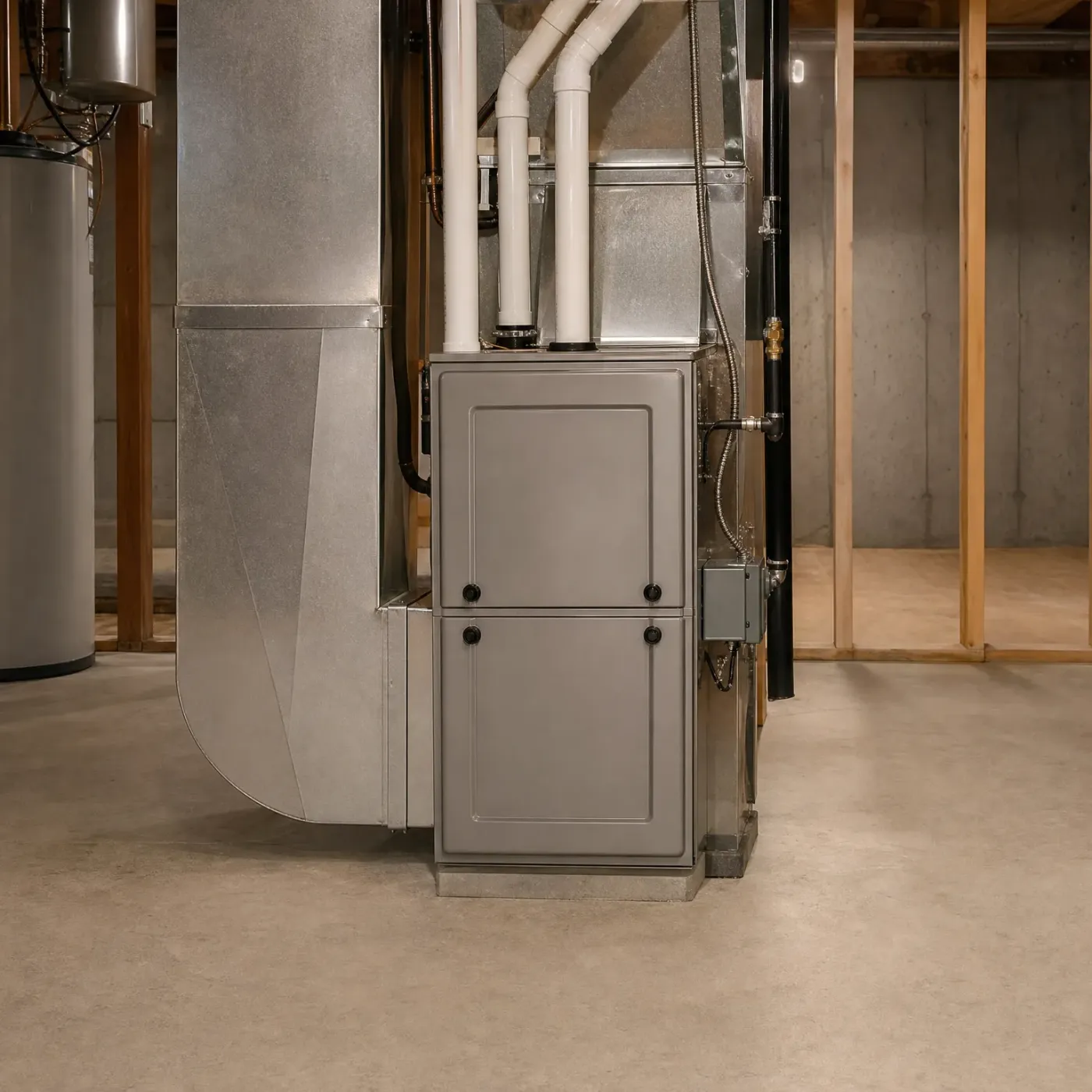
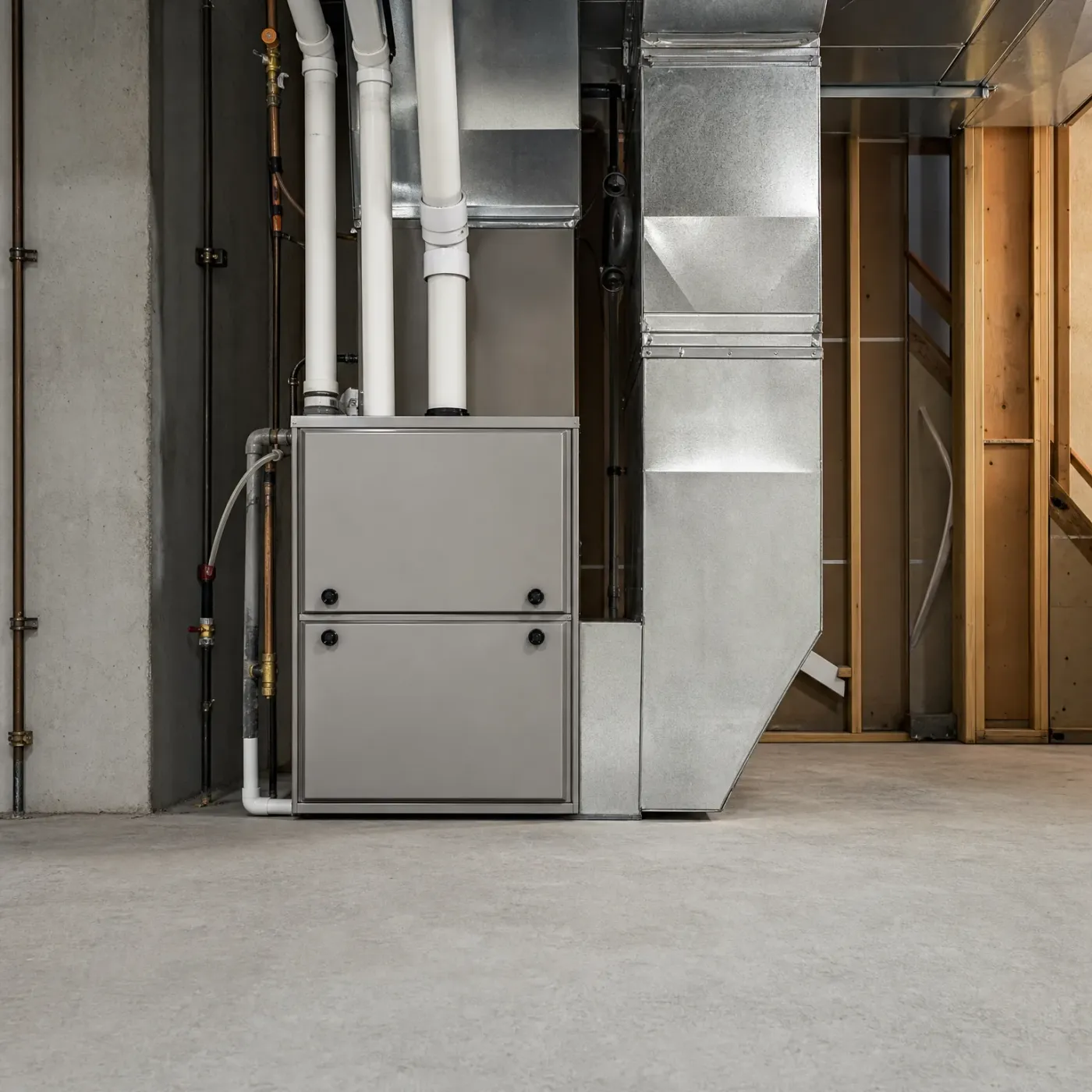
A gray high-efficiency furnace stands on a concrete basement floor beside galvanized sheet-metal ductwork, white PVC vent pipes, copper and black piping, and unfinished wood stud framing.

Running clean

This is what a furnace looks like doing its job. The cabinet is clean, the pipes are sound, and the flue has nothing to hide. No stains near the panels, no soot on the floor below. The ductwork overhead is just moving warm air through the house, nothing else.

A gray furnace with two access panels stands on a concrete basement floor beside sheet-metal ductwork, with pipes, flexible conduit and an electrical box on the concrete wall to the left.

Something's off

Same kind of unit, same basement setup, but this is where you'd catch trouble first. Check the panel seams and the pipe joints for staining. A furnace in this condition might be venting fine, or it might not be, and the only way to know is to look closely or have someone check for you.

A beige gas furnace with a metal flue pipe stands in a basement against concrete block walls, beside sheet-metal ductwork, copper and white plastic pipes, and a water heater at right.
Before you get your furnace repair
A gray high-efficiency furnace with white PVC vent pipes stands beside sheet-metal ductwork and a water heater in an unfinished basement with concrete walls and wood framing.
After you get your furnace repair
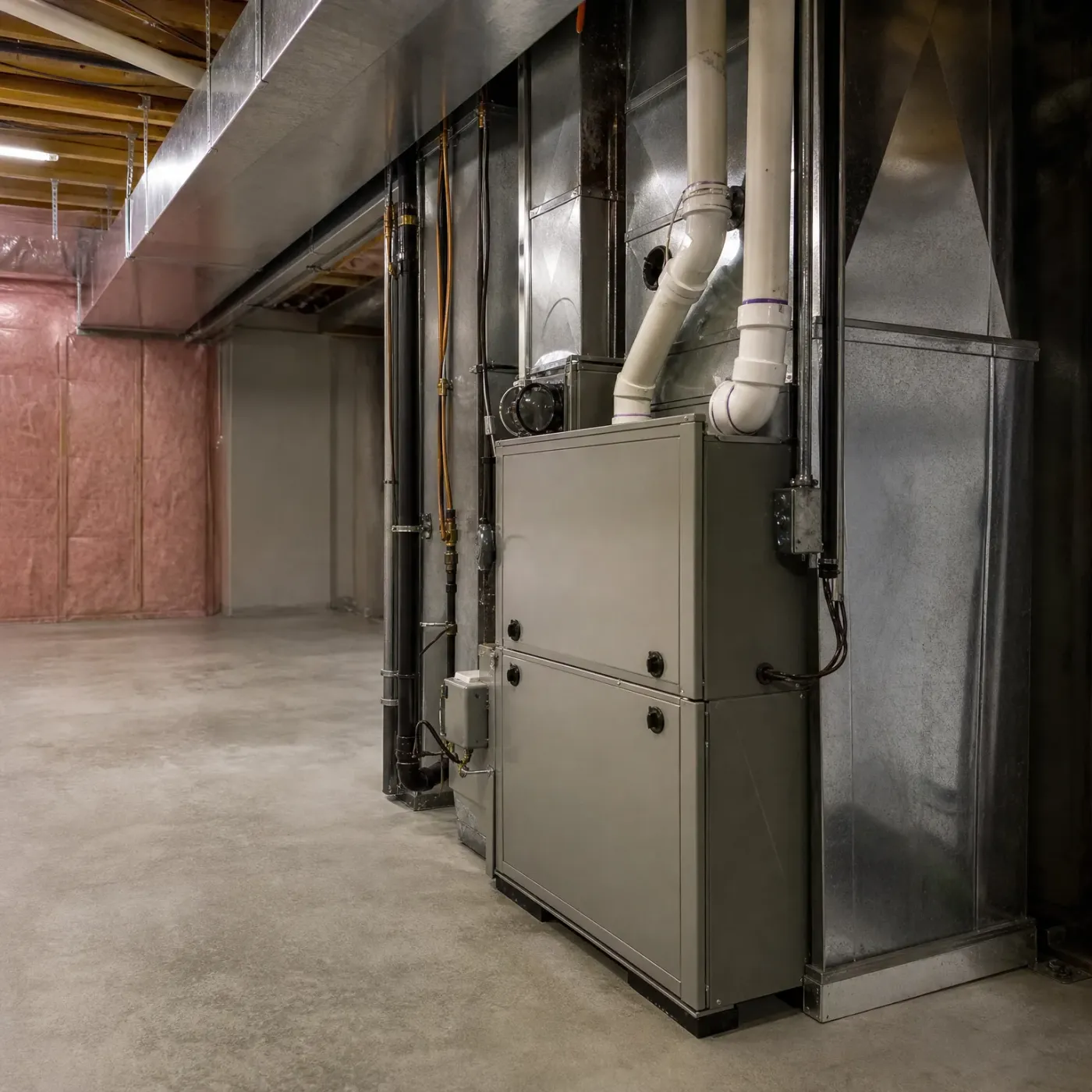
An unfinished basement with a concrete floor, pink insulation on one wall, exposed joists, galvanized sheet-metal ductwork, PVC vent pipes, and a tall gray furnace with attached gas and electrical lines.

Hand off the furnace problem

Fill out one short form instead of calling around.

Send it once and finding someone is no longer on you.

Hand off the search

No charge to send it. You decide if you hire them.

Winter nights average 30°F statewide

Winter nights in Washington average 30°F, so your furnace is running most hours it's dark out. A crack in the heat exchanger or a blocked flue doesn't stay a small problem through a whole winter of nights that cold. The more it runs, the sooner a real leak shows itself.

NOAA nClimDiv 1991-2020 county normals weighted by homes

How a furnace actually leaks it

  • Gas furnaces burn fuel to make heat, and carbon monoxide is a normal byproduct that's meant to leave through the flue.
  • A heat exchanger separates that exhaust from the air blowing into your rooms, so a crack in it lets the two mix.
  • The furnace keeps running and keeps heating the house the same as always, because nothing about a cracked exchanger trips a switch.
  • A blocked flue sends exhaust back down into the cabinet instead of up through the roof, with no sound or smell to announce it.
  • Carbon monoxide has no color and no smell, so the furnace itself never gives you a direct signal that it's happening.
  • A carbon monoxide detector is the only thing in the house built to catch what your nose and eyes can't.

A gas furnace makes heat by burning fuel, and carbon monoxide comes out of that process every time, in every furnace. That's not the problem by itself. The gas is supposed to travel through the heat exchanger and out the flue, away from the air that actually gets blown into your rooms. The heat exchanger is the part keeping those two airstreams apart. It's a metal chamber, and like any metal chamber it can crack after enough years of heating and cooling. Once it cracks, exhaust finds its way into the air your blower is pushing through the ducts. The flue is the other way this goes wrong. It's the pipe that's supposed to carry exhaust up and out of the house. If it's blocked by a bird's nest, by debris, or by something as simple as a disconnected joint, that exhaust comes back down into the cabinet instead of leaving the house. Either way, the furnace doesn't know anything is wrong. There's no sensor in a standard furnace that checks for a cracked exchanger or a blocked flue, so it keeps firing and keeps blowing warm air same as it would on a day when everything's fine. And carbon monoxide itself gives off nothing you can catch with your nose or your eyes. That's the whole reason a detector matters here. It's built to sense the one thing your furnace will never tell you on its own.

A smiling man with dark curly hair in a navy t-shirt sits on a gray couch indoors, with a large-leafed plant and a window in the background.
A bearded man in a plaid flannel shirt stands in a kitchen looking out a window toward snow-covered shrubs, with a steaming mug on the windowsill and potted plants on a shelf behind him.

A furnace that's leaking carbon monoxide shows it somewhere: a stain near the vent pipe, a yellow flame instead of blue, soot on the panel, a headache that only shows up at home. You don't need every sign to have reason enough. Most homes in Washington heat with electricity, so a gas furnace doing this is already the exception, and it's one worth taking seriously since the flue and the heat exchanger are the only things keeping that exhaust out of your rooms. Once you've noticed something is off, the next step is getting a contractor out to check it, not spending an evening searching listings, calling a few, explaining what you saw to each one, then sitting with quotes trying to guess who's worth the call. Send the details once and that part is off your plate. What's left is the repair itself, and that part still takes what it takes.

A dark wood cabinet with a paneled door and a ceramic pot of green foliage on top stands in a beige-walled room with white baseboard, a window at left, hardwood floor, and a patterned area rug.
A dark wood glass-front cabinet holding folded towels, woven baskets and a ceramic vase stands in a bathroom corner beside a window, with a potted fern and stacked towels on top and a freestanding tub partly visible at left.
A woven basket holding a green cushion and a cream fringed knit throw sits on a wood floor in a room corner beside a window and a dark wooden cabinet.
Corner of a room with a dark wood cabinet topped by a round vase, a linen curtain at a window, white baseboard, oak plank flooring with sunlight patches, and a woven jute rug in the foreground.
A dark wood sideboard against a pale wall holds a shallow stone bowl and a round ceramic vase with leafy branches, with sunlight from a curtained window falling across the wall, wood floor and woven rug.

Send one request and you're done looking

Explain the job once and skip repeating it on every call.

Send my request

There's no charge for the request.