Tell us about the job
Takes about a minute. No obligation.
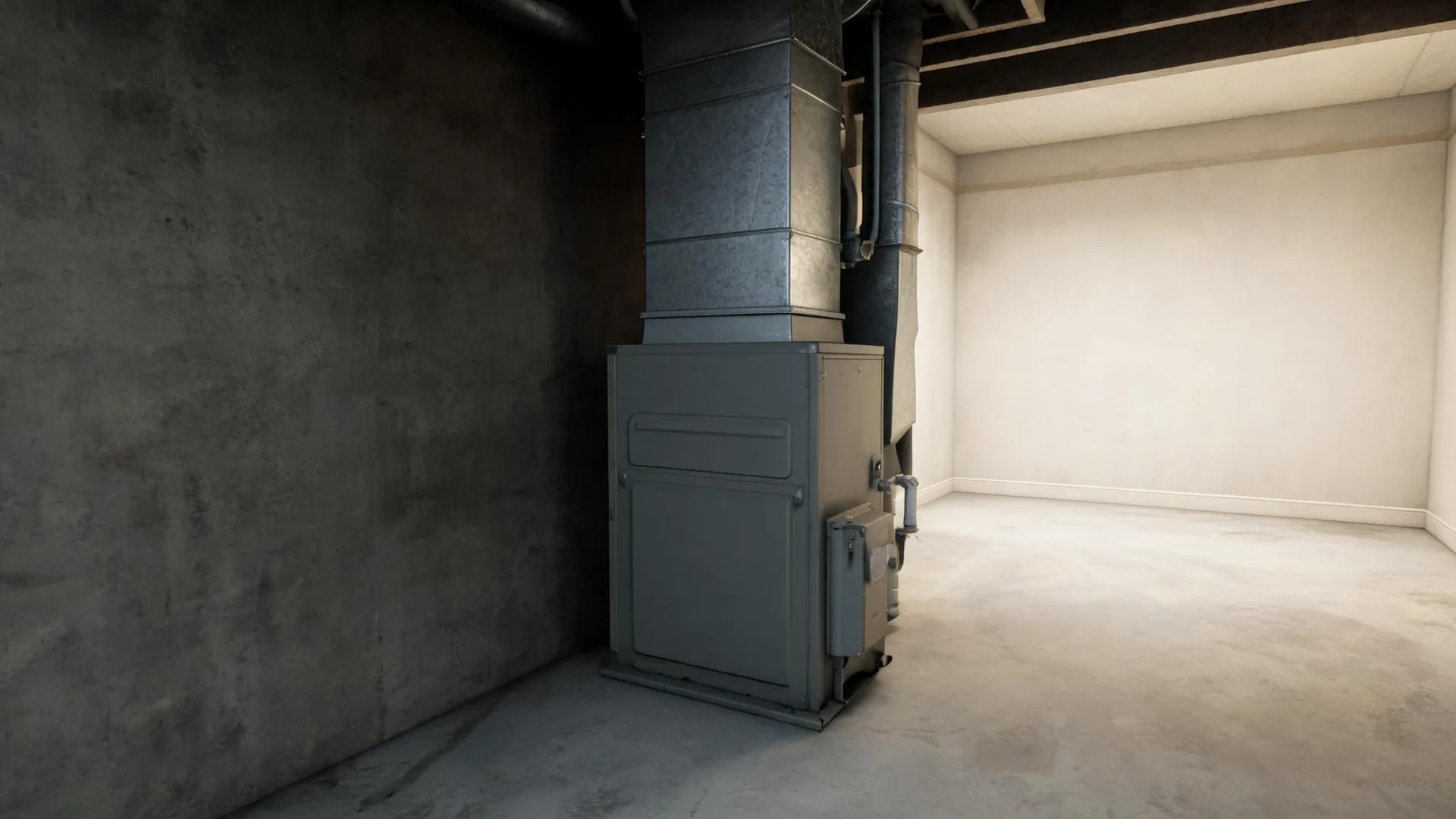
A furnace repair call here starts at the burner assembly and ignition system, because those parts cycle without rest. Homes in Jefferson County, WA run heat in every month of the year. A heat exchanger that never fully rests between seasons accumulates fatigue in ways that show up as cracks or stress fractures well before the unit's age alone would predict them. The contractor pulls and inspects the igniter, checks the flame sensor, and looks at the heat exchanger under load, not as a precaution but because the runtime record of this county makes those the likeliest failure points.
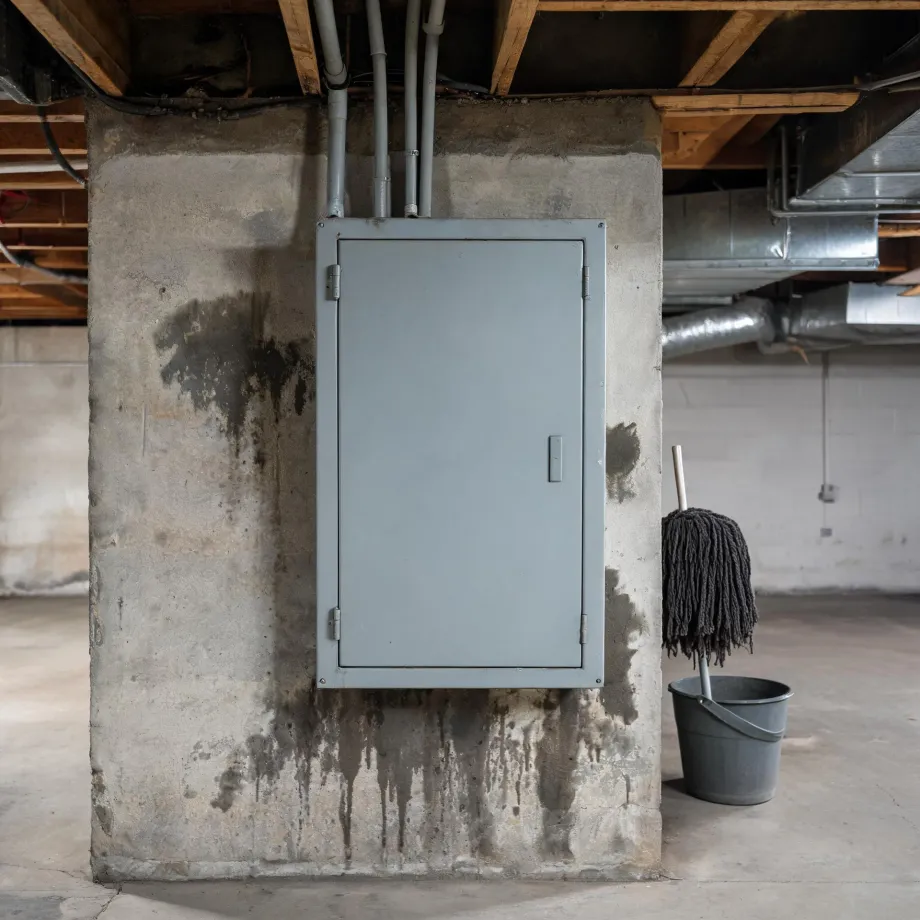
Furnaces in houses this old have typically been swapped out at least once, which means the unit a contractor opens is younger than the walls around it. Half the homes in Jefferson County, Washington were built in 1988 or earlier (2020-2024 ACS 5-year). What that gap produces, on a repair call, is a system whose heat exchanger, burner assembly, and flue connections have their own wear history, independent of the house's age. A contractor pulling the cabinet open has to read what is actually there: whether combustion residue has built up on the heat exchanger, whether the burner ports are fouled, whether the flue draws cleanly. Parts availability for a unit in that condition depends on the manufacturer and the model, not on when the foundation was poured.
The Parts of a Furnace a Contractor Checks First
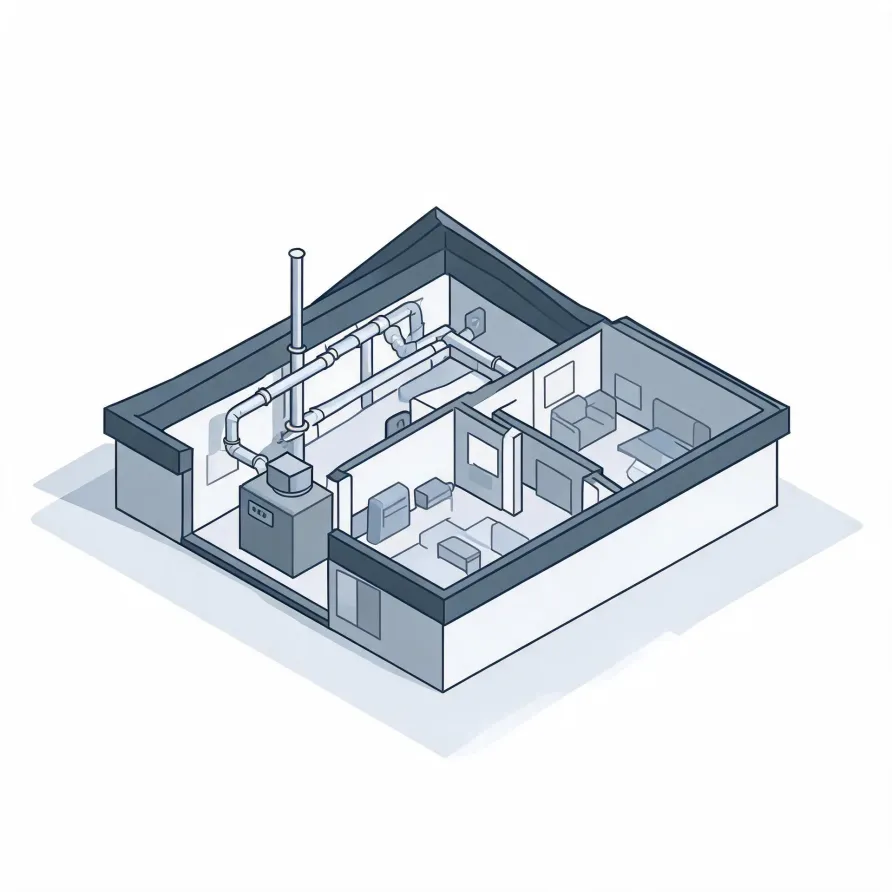
The furnace itself sits in a utility area, basement, or closet and is the piece a contractor goes to first. Inside it, the heat exchanger, burners, and blower motor each have a distinct job, and a fault in any one of them shows up differently. A cracked heat exchanger, a dirty burner, or a failing blower will each produce its own set of symptoms.
The flue pipe carries combustion gases out of the house, and the condensate drain handles moisture on high-efficiency units. Alongside those, the thermostat and the limit and pressure switches tell the furnace when to run and when to shut down. A contractor checks these control and venting components because a fault there can look like a problem with the furnace itself.
The drawing shows a typical furnace layout, and a licensed contractor determines which components apply and what condition they are in for your specific home.
Find a contractor in Jefferson CountyJefferson County, Washington, by the numbers
Half the homes in Jefferson County, Washington were built in 1988 or earlier (2020-2024 ACS 5-year).
U.S. Census Bureau, 2020-2024 American Community Survey 5-Year EstimatesJefferson County, Washington holds 19,534 housing units (2020-2024 ACS 5-year).
U.S. Census Bureau, 2020-2024 American Community Survey 5-Year EstimatesOwners occupy 79.0% of the occupied homes in Jefferson County, Washington (2020-2024 ACS 5-year).
U.S. Census Bureau, 2020-2024 American Community Survey 5-Year EstimatesFurnace Repair Rules & Standards on the Books in Jefferson County, Washington5 sourced rules and standards
What the repair visit looks like
Non-weatherized gas furnaces manufactured on or after November 19, 2015 must reach 80.0 percent AFUE.
Non-weatherized oil-fired furnaces manufactured on or after November 19, 2015 must reach 83.0 percent AFUE.
Mobile home gas furnaces manufactured on or after November 19, 2015 must reach 80.0 percent AFUE.
Non-weatherized gas furnaces manufactured on or after December 18, 2028 must reach 95.0 percent AFUE, up from the 80.0 percent minimum that applies to units manufactured before that date.
Rules for HVAC Repair in Jefferson County, Washington
Washington requires contractor registration rather than an HVAC licence: every contractor must register with the Department of Labor and Industries, and advertising, bidding or working as a contractor without that registration is a gross misdemeanour.