Tell us about the job
Takes about a minute. No obligation.
Sizing a furnace for this house demands more than a rough square-footage guess. Homes in Stevens County, WA run heat about ten months a year, from September through June. The burner and heat exchanger cycle through nearly the entire year, and a system that was never correctly matched to the house carries that mismatch into every heating cycle. A contractor has to run a full load calculation before quoting, because the ductwork, insulation, and window area all feed into what the equipment is actually being asked to do. Install a unit too small and it runs long, hot, and hard; the heat exchanger takes the penalty first.
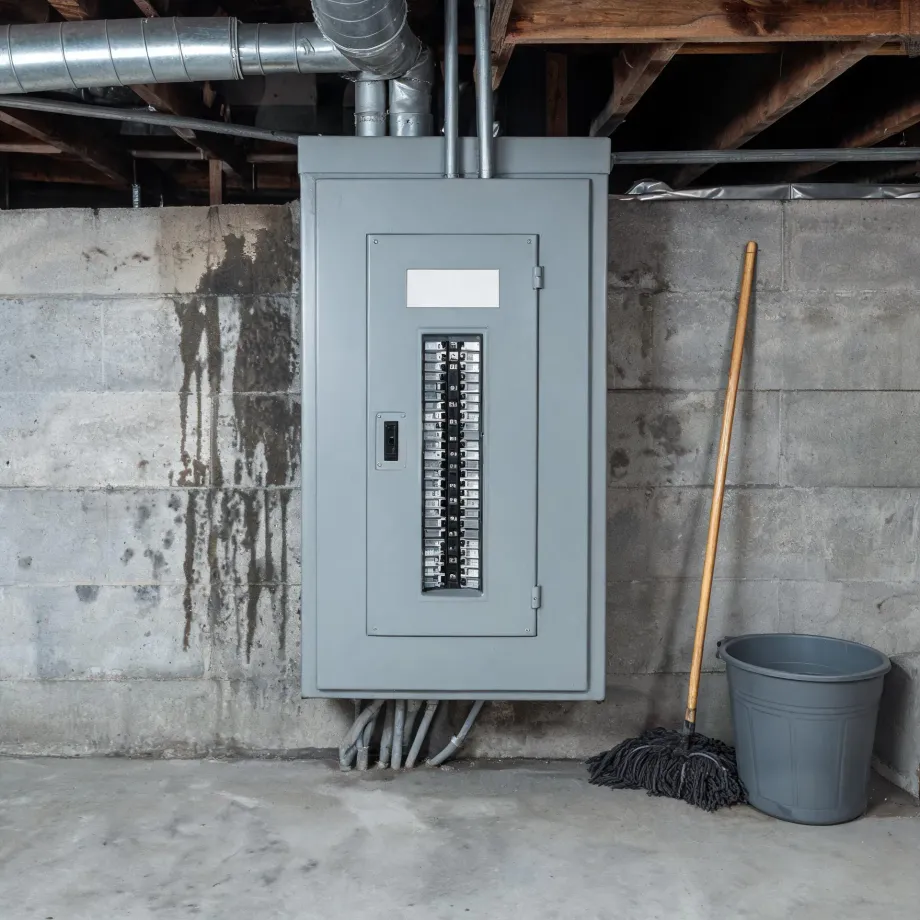
Ductwork sized and routed for an older system does not automatically carry a new furnace well. Half the homes in Stevens County, Washington were built in 1985 or earlier (2020-2024 ACS 5-year). A contractor installing a new unit in stock like this has to assess what the ducts will actually deliver before anything else gets priced, because a mismatch between the new equipment and the existing runs shows up as uneven heat, not as a failed inspection. The electrical service gets checked for the same reason. Both are already in the house, and both were put there for something other than what a modern furnace draws.
What a Furnace Installation Covers in Your Home
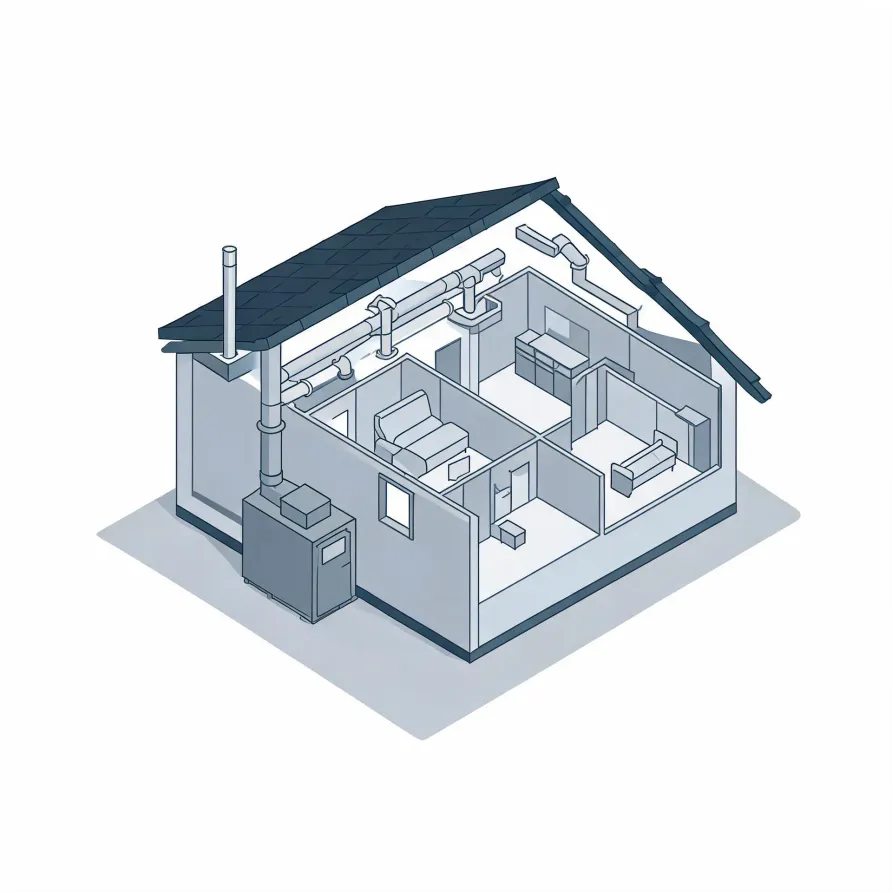
The furnace itself sits inside the house, most often in a basement, utility room, or closet. It is the central unit that generates heat and pushes conditioned air into the living space. A new installation also includes the flue or venting pipe that carries combustion gases out of the house.
The air handler or blower assembly works alongside the furnace, moving air through the system, and connects to a thermostat mounted on an interior wall that gives the homeowner control over temperature. A new installation accounts for each of these pieces and how they fit together in the existing space.
The drawing shows a typical layout, and a licensed contractor determines exactly what applies to this house.
Find a contractor in Stevens CountyStevens County, by the numbers
363 severe weather events were recorded in Stevens County, Washington between 2015 and 2024.
NOAA National Centers for Environmental Information, Storm Events Database, bulk CSV export, events 2015-01-01 through 2024-12-31.Half the homes in Stevens County, Washington were built in 1985 or earlier (2020-2024 ACS 5-year).
U.S. Census Bureau, 2020-2024 American Community Survey 5-Year EstimatesStevens County, Washington holds 22,782 housing units (2020-2024 ACS 5-year).
U.S. Census Bureau, 2020-2024 American Community Survey 5-Year EstimatesOwners occupy 79.8% of the occupied homes in Stevens County, Washington (2020-2024 ACS 5-year).
U.S. Census Bureau, 2020-2024 American Community Survey 5-Year EstimatesFurnace & HVAC Installation Rules for Stevens County, Washington5 sourced standards & codes
What the installation actually looks like
Non-weatherized gas furnaces manufactured on or after November 19, 2015 must reach 80.0 percent AFUE.
Non-weatherized oil-fired furnaces manufactured on or after November 19, 2015 must reach 83.0 percent AFUE.
Mobile home gas furnaces manufactured on or after November 19, 2015 must reach 80.0 percent AFUE.
Non-weatherized gas furnaces manufactured on or after December 18, 2028 must reach 95.0 percent AFUE, up from the 80.0 percent minimum that applies to units manufactured before that date.
Licensing and Legal Requirements in Stevens County, Washington
Washington requires contractor registration rather than an HVAC licence: every contractor must register with the Department of Labor and Industries, and advertising, bidding or working as a contractor without that registration is a gross misdemeanour.
Weather Conditions in Stevens County That Drive Heating Demand
Furnace equipment works against the local climate every day it runs. How hard that work gets, and how well the equipment holds up, depends on what the weather in Stevens County actually does year over year.
363 severe weather events, 2015–2024. Source: NOAA National Centers for Environmental Information, Storm Events Database.