Tell us about the job
Takes about a minute. No obligation.
A furnace in Stevens County barely gets a rest. Homes in Stevens County, WA run heat about ten months a year, from September through June. The burner, the heat exchanger, and the ignition system cycle through most of what the calendar offers, and wear shows on those parts first. A contractor quoting a repair here checks the heat exchanger for cracks and the ignition components for degradation before pricing anything else, because those are the parts that absorb the load. A system that was undersized at installation runs harder to keep up, and a repair call often reveals that strain directly in those components.
Ductwork in a house that has changed furnaces at least once carries the decisions made during every swap: a flue rerouted here, a plenum patched there, joints sealed with whatever was on hand. Half the homes in Stevens County, Washington were built in 1985 or earlier (2020-2024 ACS 5-year). A contractor opening a furnace for repair in this county works through that accumulated history to find what is actually failing, because a blower or heat exchanger problem can look identical to a duct restriction until the system is apart. Parts availability for the equipment itself is a separate question the opened unit answers.
The Parts of a Furnace a Contractor Checks First
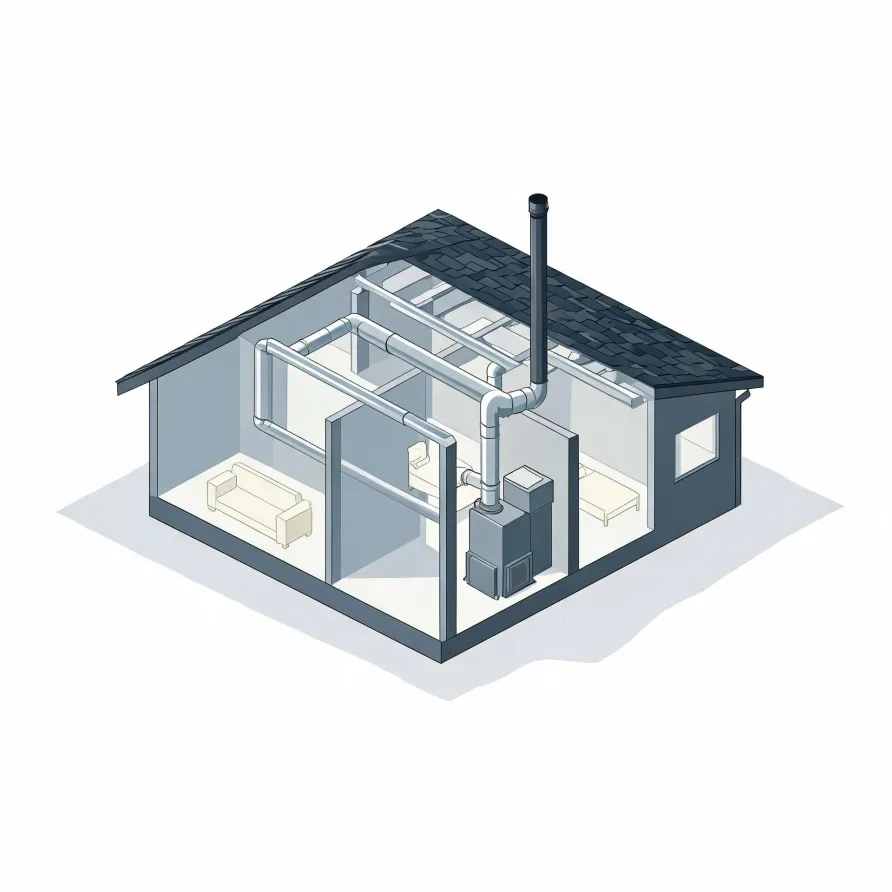
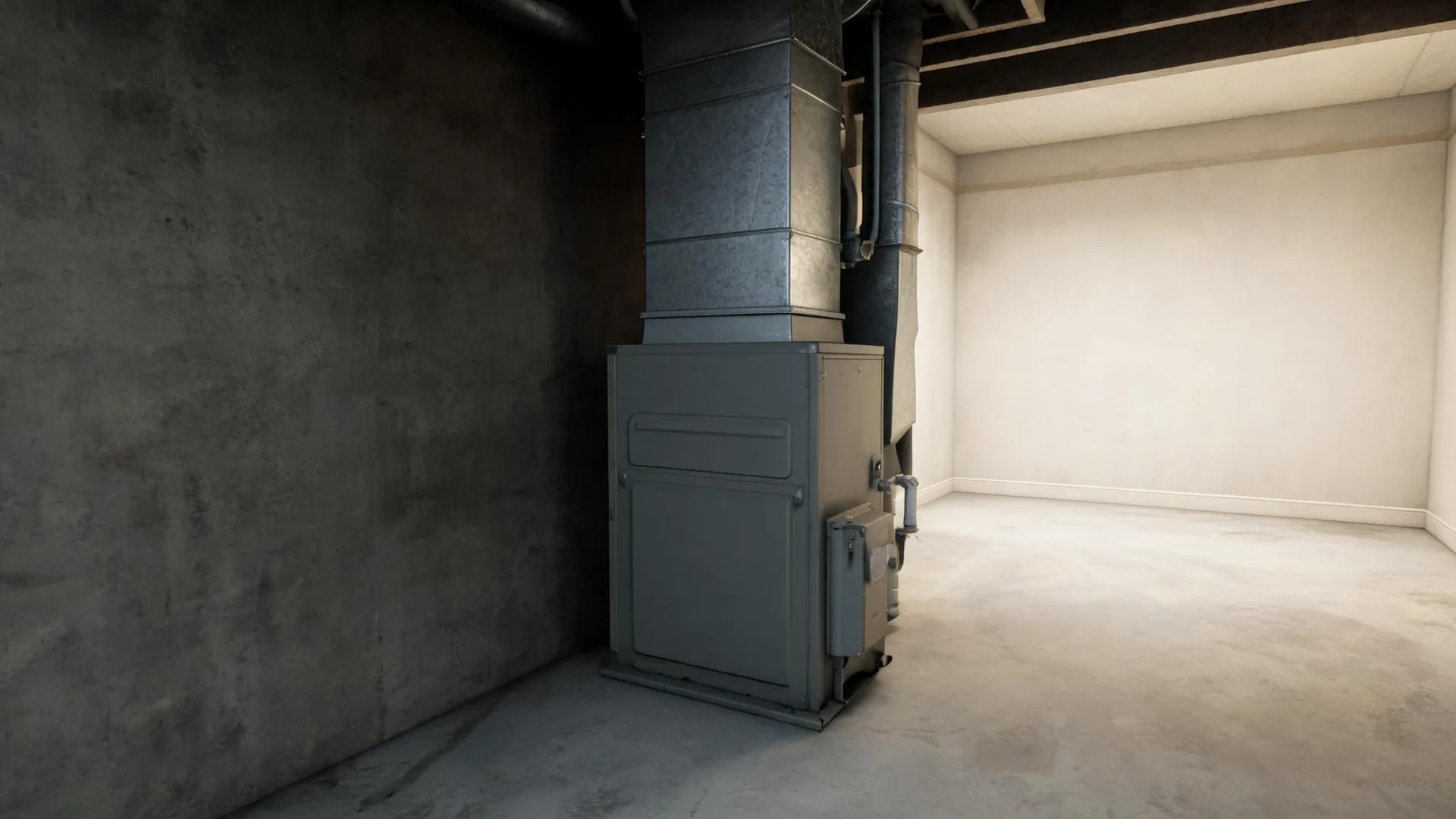
The furnace itself sits in the basement, utility room, or closet and is the piece a contractor opens first. Inside it, the heat exchanger is the part that does the actual warming work, and a crack or failure there is often what a repair call comes down to. The burners and igniter sit just below it, and when a furnace fails to start, those two components are where the inspection begins.
The blower motor and its fan wheel sit at the base of the furnace cabinet and push conditioned air out into the house. The flue pipe runs from the top of the unit up and out, carrying combustion gases away, and a blocked or corroded flue shows up as a safety fault that shuts the whole system down. The control board ties these pieces together, reading signals from the thermostat and telling each component when to act.
The drawing shows a typical furnace layout, and a licensed contractor determines which components apply to the specific unit and setup in your home.
Find a contractor in Stevens CountyStevens County, by the numbers
363 severe weather events were recorded in Stevens County, Washington between 2015 and 2024.
NOAA National Centers for Environmental Information, Storm Events Database, bulk CSV export, events 2015-01-01 through 2024-12-31.Half the homes in Stevens County, Washington were built in 1985 or earlier (2020-2024 ACS 5-year).
U.S. Census Bureau, 2020-2024 American Community Survey 5-Year EstimatesStevens County, Washington holds 22,782 housing units (2020-2024 ACS 5-year).
U.S. Census Bureau, 2020-2024 American Community Survey 5-Year EstimatesOwners occupy 79.8% of the occupied homes in Stevens County, Washington (2020-2024 ACS 5-year).
U.S. Census Bureau, 2020-2024 American Community Survey 5-Year EstimatesFurnace Repair Rules and Standards on Record for Stevens County, Washington5 codes, laws, and standards
What happens when a contractor comes out
Non-weatherized gas furnaces manufactured on or after November 19, 2015 must reach 80.0 percent AFUE.
Non-weatherized oil-fired furnaces manufactured on or after November 19, 2015 must reach 83.0 percent AFUE.
Mobile home gas furnaces manufactured on or after November 19, 2015 must reach 80.0 percent AFUE.
Non-weatherized gas furnaces manufactured on or after December 18, 2028 must reach 95.0 percent AFUE, up from the 80.0 percent minimum that applies to units manufactured before that date.
What Stevens County, Washington Requires for This Work
Washington requires contractor registration rather than an HVAC licence: every contractor must register with the Department of Labor and Industries, and advertising, bidding or working as a contractor without that registration is a gross misdemeanour.
Severe Weather Events in Stevens County
Heating equipment works harder when the weather turns extreme, and strain from weather events is one of the real causes of furnace repairs. How often conditions push that hard is a local fact, and it shapes what furnace repair looks like in Stevens County.
363 severe weather events, 2015–2024. Source: NOAA National Centers for Environmental Information, Storm Events Database.