Tell us about the job
Takes about a minute. No obligation.
A contractor quoting a furnace installation in San Juan County has to size the equipment against a long, real heating load before anything else on the job matters. Homes in San Juan County, WA run heat about ten months a year, from September through June. The burner, heat exchanger, and ignition system carry that load every year, and a unit that is undersized or installed with leaky duct connections will not hide the problem for long. Wear builds on the parts that cycle, and a furnace that starts each fall already fighting a sizing mismatch earns a repair call well ahead of its expected service life.
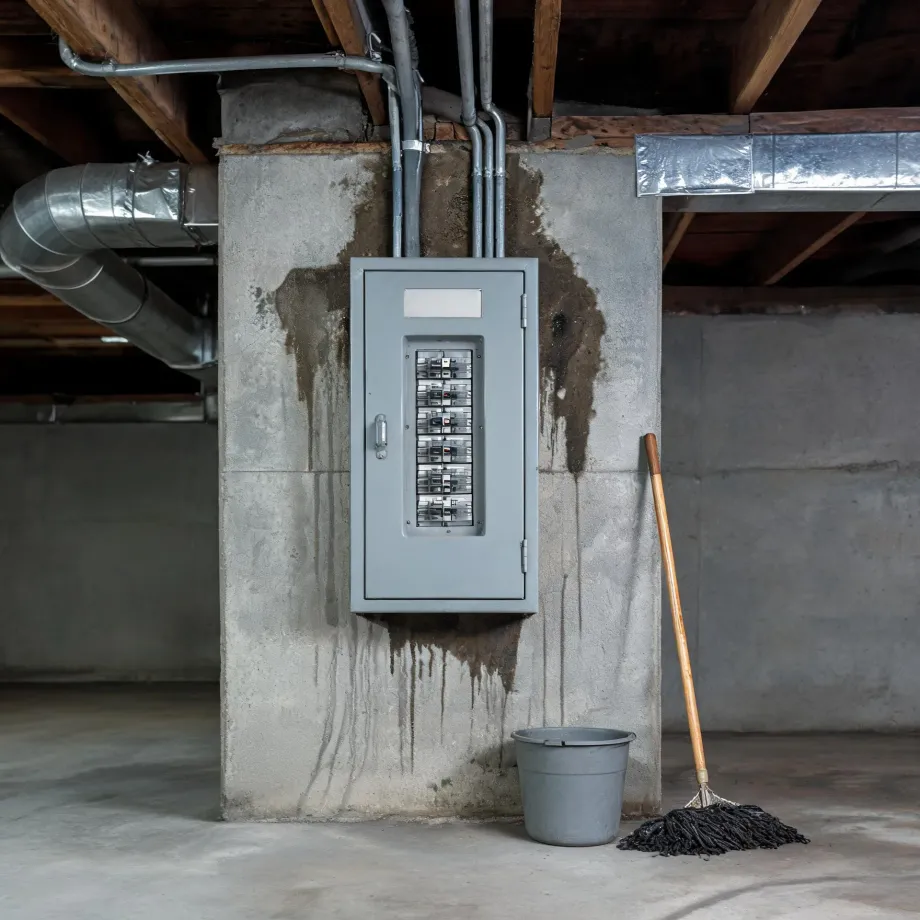
Ductwork sized for a previous generation of equipment is what a furnace installation runs into here, and whether it carries the new load is the question that shapes everything else on the job. Half the homes in San Juan County, Washington were built in 1988 or earlier (2020-2024 ACS 5-year). A contractor scoping a new furnace in this county opens the duct runs and measures what is there before the equipment choice is final. If the existing ductwork cannot deliver the right airflow, the electrical panel is the next stop, checked against what the new unit draws. The furnace itself is straightforward to specify; what surrounds it in these houses is what the job turns on.
What a Furnace Installation Covers
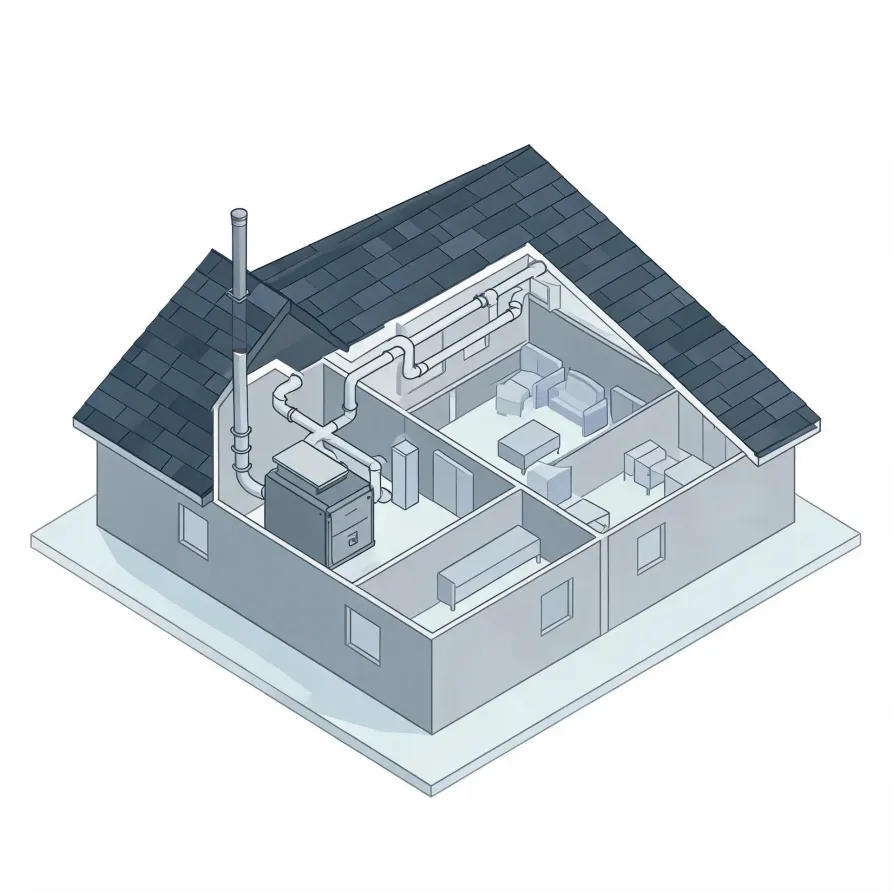
The furnace itself sits inside the house, most often in a basement, utility room, or closet. It is the central unit that heats the air your home circulates. The flue pipe runs from the furnace to an exterior wall or roofline, carrying combustion gases out of the house.
The thermostat mounts on an interior wall and tells the furnace when to fire and when to stop. The air handler components, filter housing, and blower sit within or directly beside the furnace cabinet, drawing return air in and pushing conditioned air back out through the supply side.
The drawing shows the general layout of a furnace system, and a licensed contractor determines exactly what applies to your house.
Find a contractor in San Juan CountySan Juan County, Washington, by the numbers
54 severe weather events were recorded in San Juan County, Washington between 2015 and 2024.
NOAA National Centers for Environmental Information, Storm Events Database, bulk CSV export, events 2015-01-01 through 2024-12-31.Half the homes in San Juan County, Washington were built in 1988 or earlier (2020-2024 ACS 5-year).
U.S. Census Bureau, 2020-2024 American Community Survey 5-Year EstimatesSan Juan County, Washington holds 13,990 housing units (2020-2024 ACS 5-year).
U.S. Census Bureau, 2020-2024 American Community Survey 5-Year EstimatesOwners occupy 78.0% of the occupied homes in San Juan County, Washington (2020-2024 ACS 5-year).
U.S. Census Bureau, 2020-2024 American Community Survey 5-Year EstimatesFurnace Installation Rules for San Juan County, Washington5 codes, standards, and laws
What the installation looks like from your side
Non-weatherized gas furnaces manufactured on or after November 19, 2015 must reach 80.0 percent AFUE.
Non-weatherized oil-fired furnaces manufactured on or after November 19, 2015 must reach 83.0 percent AFUE.
Mobile home gas furnaces manufactured on or after November 19, 2015 must reach 80.0 percent AFUE.
Non-weatherized gas furnaces manufactured on or after December 18, 2028 must reach 95.0 percent AFUE, up from the 80.0 percent minimum that applies to units manufactured before that date.
Licensing and Legal Requirements in San Juan County, Washington
Washington requires contractor registration rather than an HVAC licence: every contractor must register with the Department of Labor and Industries, and advertising, bidding or working as a contractor without that registration is a gross misdemeanour.
Severe Weather in San Juan County
Weather conditions here place real demands on heating equipment, from how hard a furnace works through a cold stretch to how often it cycles under stress. What happens outside shapes what a furnace needs to handle, and that makes local weather history a practical part of understanding what a proper installation requires.
54 severe weather events, 2015–2022. Source: NOAA National Centers for Environmental Information, Storm Events Database.