Tell us about the job
Takes about a minute. No obligation.
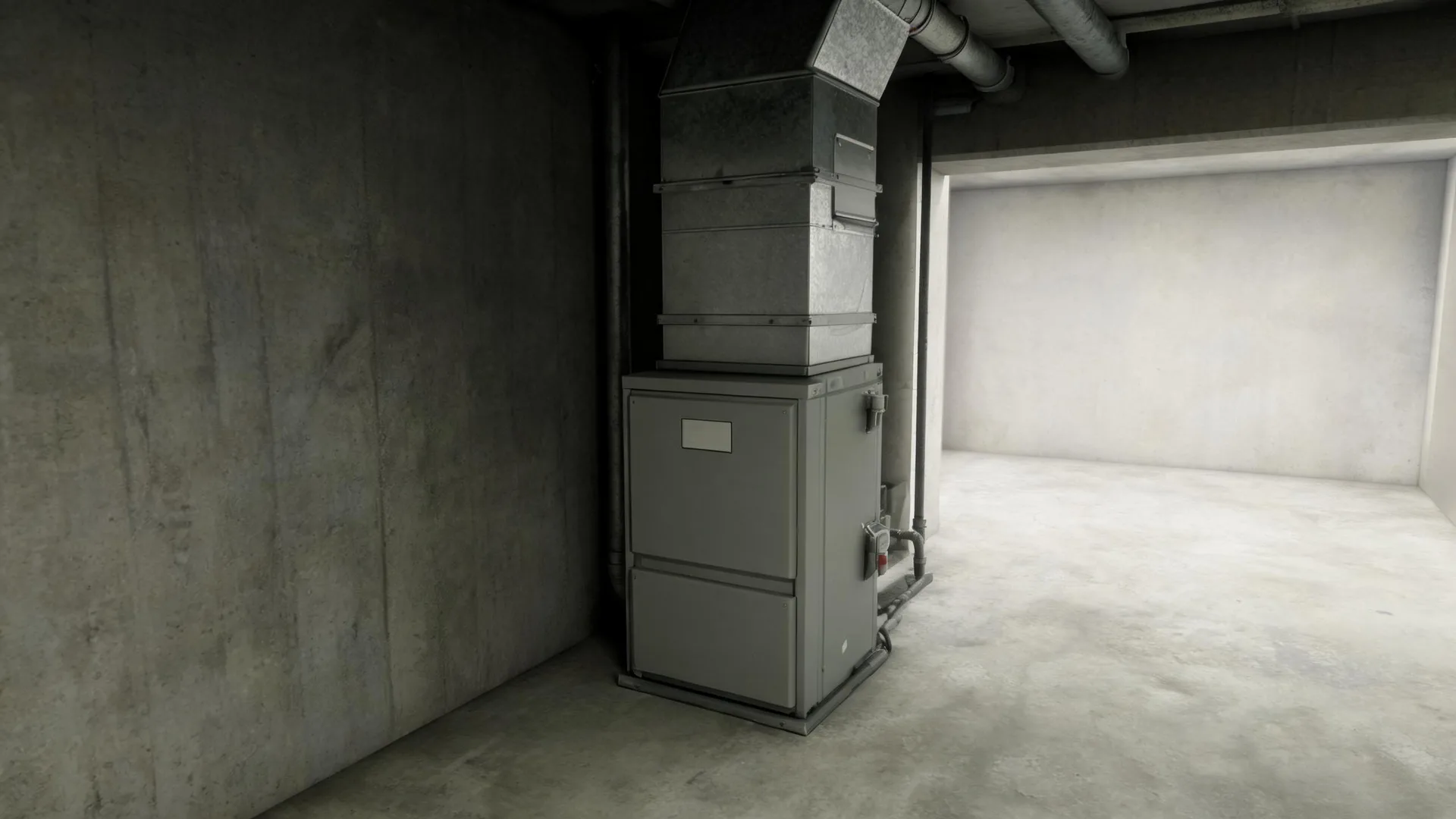
Sizing a furnace for this county starts with the actual load the burner and heat exchanger are expected to carry, and that load is larger than most installers default to. Homes in Klickitat County, WA run heat about ten months a year, from September through June. The heat exchanger cycles through expansion and contraction every time the burner fires, and a unit running through most of the calendar accumulates those cycles fast. A contractor quoting a replacement here prices for that reality: undersized equipment does not coast through the shoulder months, it strains through them, and the ignition system and burner show the difference.
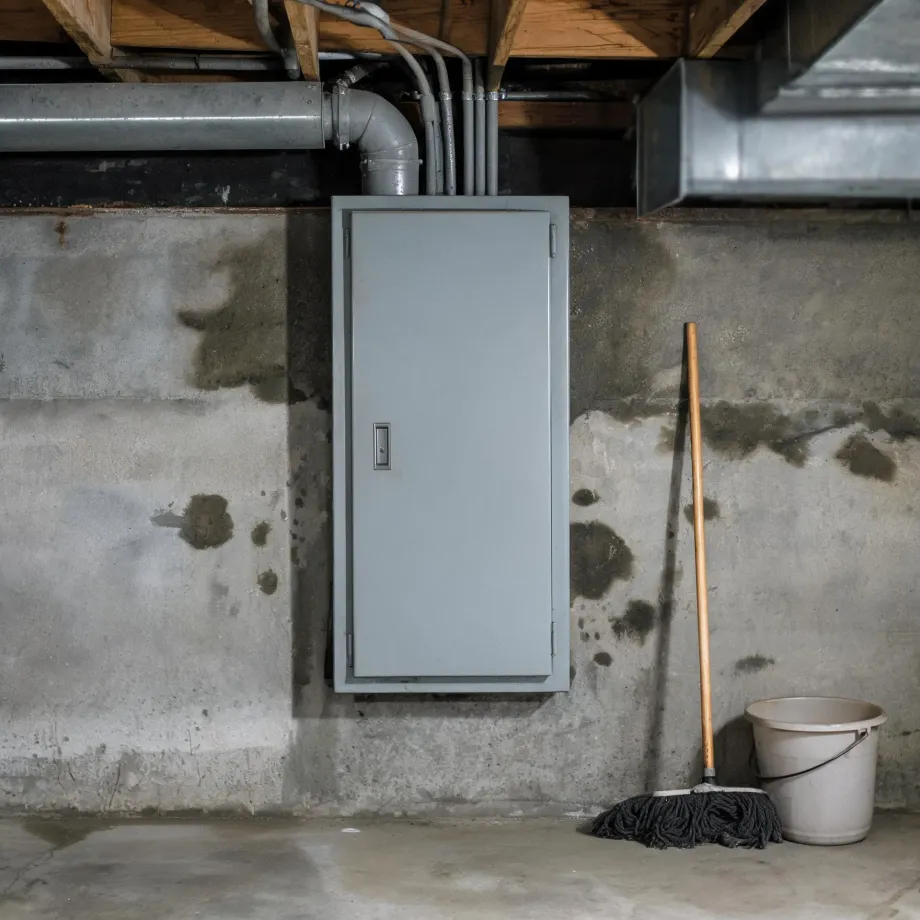
Ductwork laid in for a previous generation of equipment carries assumptions about static pressure and airflow that a new furnace will test immediately. Half the homes in Klickitat County, Washington were built in 1986 or earlier (2020-2024 ACS 5-year). A contractor sizing a replacement here checks whether that existing duct network can actually move the air the new unit will push, because undersized or poorly routed runs create comfort problems the furnace itself cannot fix. The electrical side gets the same look: what a panel was built to handle and what a new unit draws are two questions with separate answers.
What a Furnace Installation Covers
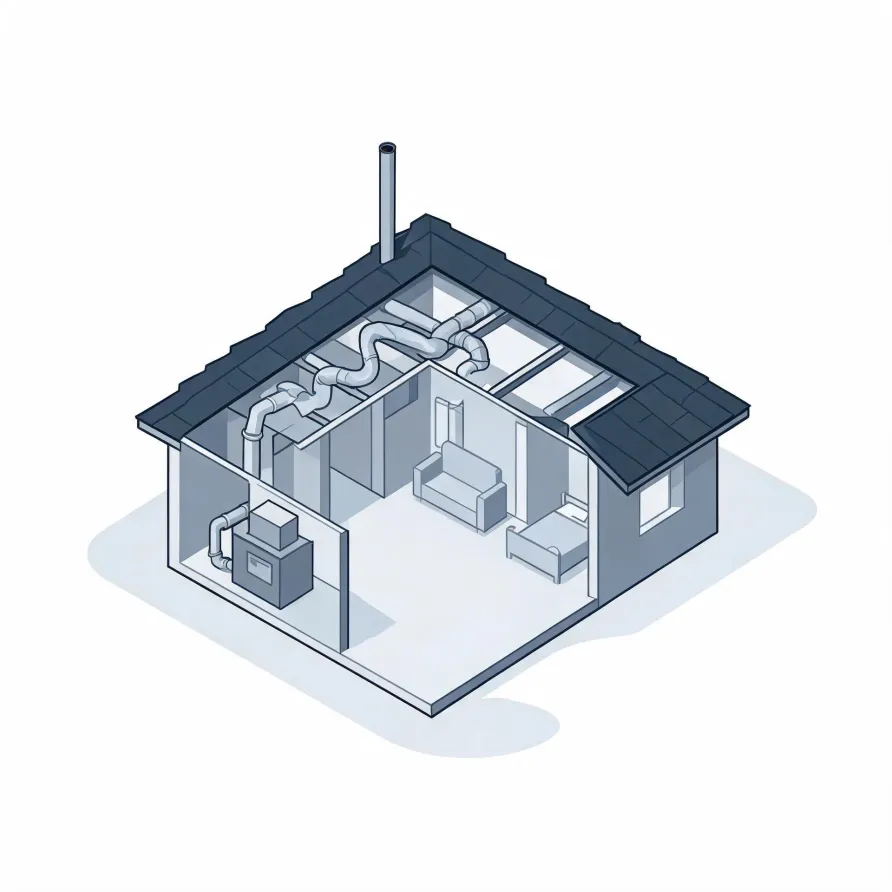
The furnace itself sits inside the house, most often in a basement, utility room, or closet. It is the unit that generates heat by burning fuel or running electrical elements, then pushing that heated air into the duct system. The flue pipe exits the furnace and carries combustion gases out of the house.
The thermostat mounts on an interior wall and tells the furnace when to run. The air handler, where it is a separate unit, sits near the furnace and moves air across the heat exchanger and into the supply ducts. A filter slot, built into the return-air side, holds the filter that screens particulates before air enters the unit.
The drawing shows a typical layout, and a licensed contractor determines exactly what applies to this house.
Find a contractor in Klickitat CountyKlickitat County, by the numbers
100 severe weather events were recorded in Klickitat County, Washington between 2015 and 2024.
NOAA National Centers for Environmental Information, Storm Events Database, bulk CSV export, events 2015-01-01 through 2024-12-31.Half the homes in Klickitat County, Washington were built in 1986 or earlier (2020-2024 ACS 5-year).
U.S. Census Bureau, 2020-2024 American Community Survey 5-Year EstimatesKlickitat County, Washington holds 10,945 housing units (2020-2024 ACS 5-year).
U.S. Census Bureau, 2020-2024 American Community Survey 5-Year EstimatesOwners occupy 76.7% of the occupied homes in Klickitat County, Washington (2020-2024 ACS 5-year).
U.S. Census Bureau, 2020-2024 American Community Survey 5-Year EstimatesFurnace Installation Rules on the Books for Klickitat County, Washington5 sourced standards and codes
What the installation looks like from your end
Non-weatherized gas furnaces manufactured on or after November 19, 2015 must reach 80.0 percent AFUE.
Non-weatherized oil-fired furnaces manufactured on or after November 19, 2015 must reach 83.0 percent AFUE.
Mobile home gas furnaces manufactured on or after November 19, 2015 must reach 80.0 percent AFUE.
Non-weatherized gas furnaces manufactured on or after December 18, 2028 must reach 95.0 percent AFUE, up from the 80.0 percent minimum that applies to units manufactured before that date.
Licensing and Legal Requirements in Klickitat County, Washington
Washington requires contractor registration rather than an HVAC licence: every contractor must register with the Department of Labor and Industries, and advertising, bidding or working as a contractor without that registration is a gross misdemeanour.
Severe Weather Events in Klickitat County
Klickitat County's climate puts real demand on heating equipment, and that demand is shaped by how hard the weather runs year to year. A furnace sized and installed for local conditions carries a different workload than one spec'd somewhere milder.
100 severe weather events, 2015–2024. Source: NOAA National Centers for Environmental Information, Storm Events Database.