Tell us about the job
Takes about a minute. No obligation.
Sizing a furnace for Yakima County is not a back-of-envelope exercise. Homes in Yakima County, WA run heat about ten months a year, from September through June. A burner cycling through that length of season accumulates wear on the heat exchanger and ignition system at a rate that punishes any gap in the original installation. A contractor quoting a replacement here has to run a proper load calculation, because undersizing means the burner runs longer cycles to chase setpoint, and that accelerates the parts that fail first. Ductwork condition and envelope tightness both feed into that number before a unit gets specified.
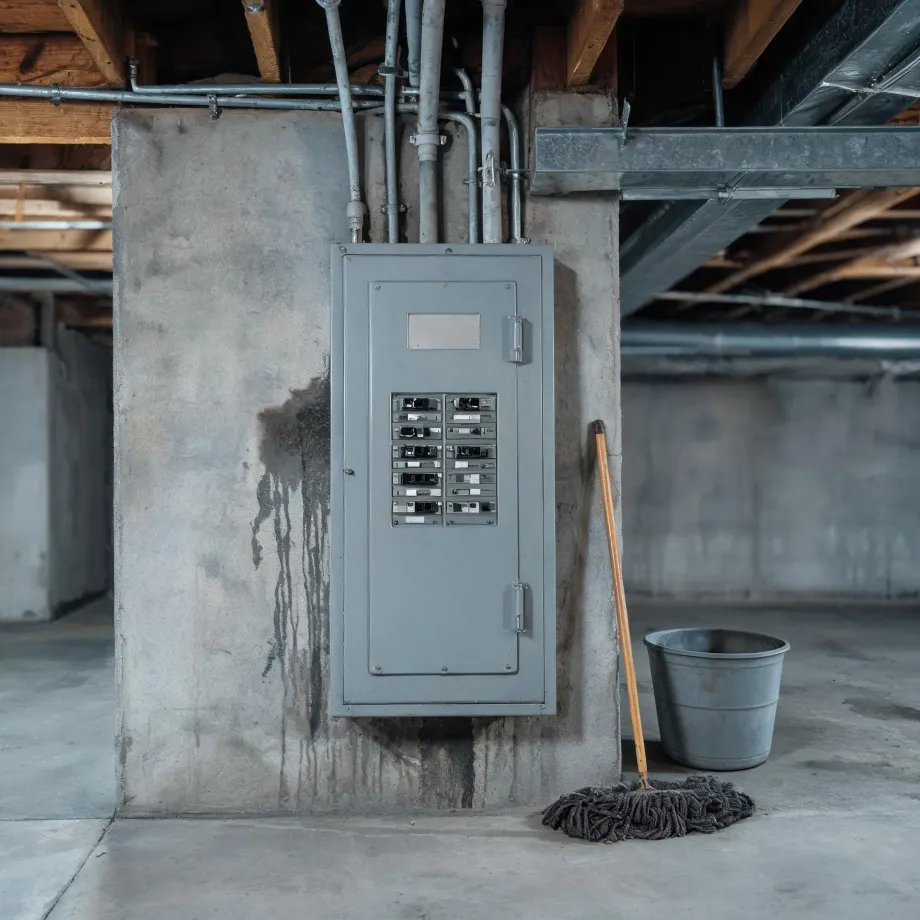
Ductwork laid in for an earlier generation of equipment is what a furnace contractor has to account for here. Half the homes in Yakima County, Washington were built in 1977 or earlier (2020-2024 ACS 5-year). That gap between the building and what now runs in it means the existing runs were never designed around current airflow demands, and a contractor has to check whether they will carry a new unit before pricing one. Electrical service gets the same look, since a panel sized for an older load may need an upgrade before a new furnace can be connected.
What a Furnace Installation Covers
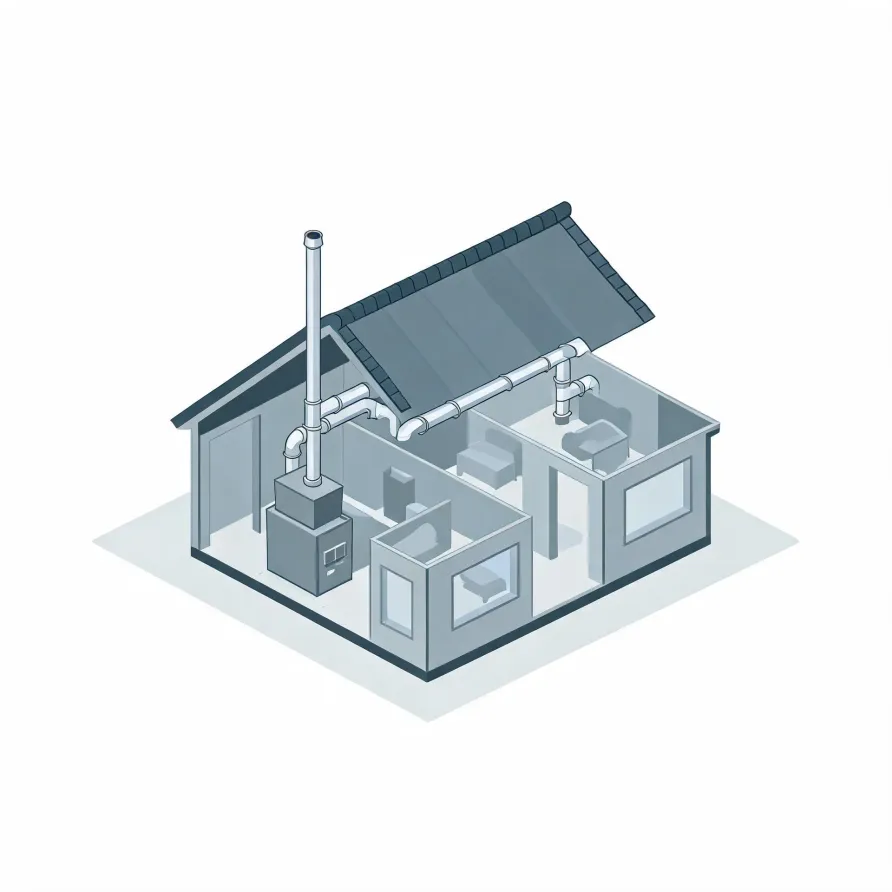
The furnace itself sits inside the house, most often in a basement, utility closet, or mechanical room. It is the central unit that produces heat and pushes conditioned air into the living space. A new installation also includes the flue or venting assembly, which runs from the furnace to an exterior wall or roofline and carries combustion gases out of the house.
The air handler components built into the furnace cabinet work alongside a thermostat, which mounts on an interior wall and gives the homeowner control over when the system runs and at what target temperature. Where the system also handles cooling, a contractor fits the furnace with an evaporator coil that sits directly above the heat exchanger inside the cabinet.
The drawing shows a typical layout, and a licensed contractor determines exactly which components apply to this house.
Find a contractor in Yakima CountyYakima County, by the numbers
84 severe weather events were recorded in Yakima County, Washington between 2015 and 2024.
NOAA National Centers for Environmental Information, Storm Events Database, bulk CSV export, events 2015-01-01 through 2024-12-31.Half the homes in Yakima County, Washington were built in 1977 or earlier (2020-2024 ACS 5-year).
U.S. Census Bureau, 2020-2024 American Community Survey 5-Year EstimatesYakima County, Washington holds 92,432 housing units (2020-2024 ACS 5-year).
U.S. Census Bureau, 2020-2024 American Community Survey 5-Year EstimatesOwners occupy 61.8% of the occupied homes in Yakima County, Washington (2020-2024 ACS 5-year).
U.S. Census Bureau, 2020-2024 American Community Survey 5-Year EstimatesFurnace Installation Rules for Yakima County, Washington5 sourced standards and codes
What the Installation Actually Looks Like
Non-weatherized gas furnaces manufactured on or after November 19, 2015 must reach 80.0 percent AFUE.
Non-weatherized oil-fired furnaces manufactured on or after November 19, 2015 must reach 83.0 percent AFUE.
Mobile home gas furnaces manufactured on or after November 19, 2015 must reach 80.0 percent AFUE.
Non-weatherized gas furnaces manufactured on or after December 18, 2028 must reach 95.0 percent AFUE, up from the 80.0 percent minimum that applies to units manufactured before that date.
Contractor Requirements in Yakima County, Washington
Washington requires contractor registration rather than an HVAC licence: every contractor must register with the Department of Labor and Industries, and advertising, bidding or working as a contractor without that registration is a gross misdemeanour.
Severe Weather Events in Yakima County
Heating equipment works against the conditions outside, and those conditions are not the same everywhere. How hard a furnace runs over its lifetime depends on what the local climate actually demands of it.
84 severe weather events, 2015–2024. Source: NOAA National Centers for Environmental Information, Storm Events Database.