Tell us about the job
Takes about a minute. No obligation.
A furnace repair in Wahkiakum County starts with the parts that cycle hardest: the igniter, the heat exchanger, and the burner assembly. Homes in Wahkiakum County, WA run heat about ten months a year, from September through June. By late spring, those components have fired and cooled hundreds of times, and a contractor opening the cabinet will often find fatigue in the igniter or stress cracking in the heat exchanger long before the cabinet itself shows anything wrong. The age of a unit gives a contractor a starting point, but the condition of those cycling parts is what determines the repair scope.
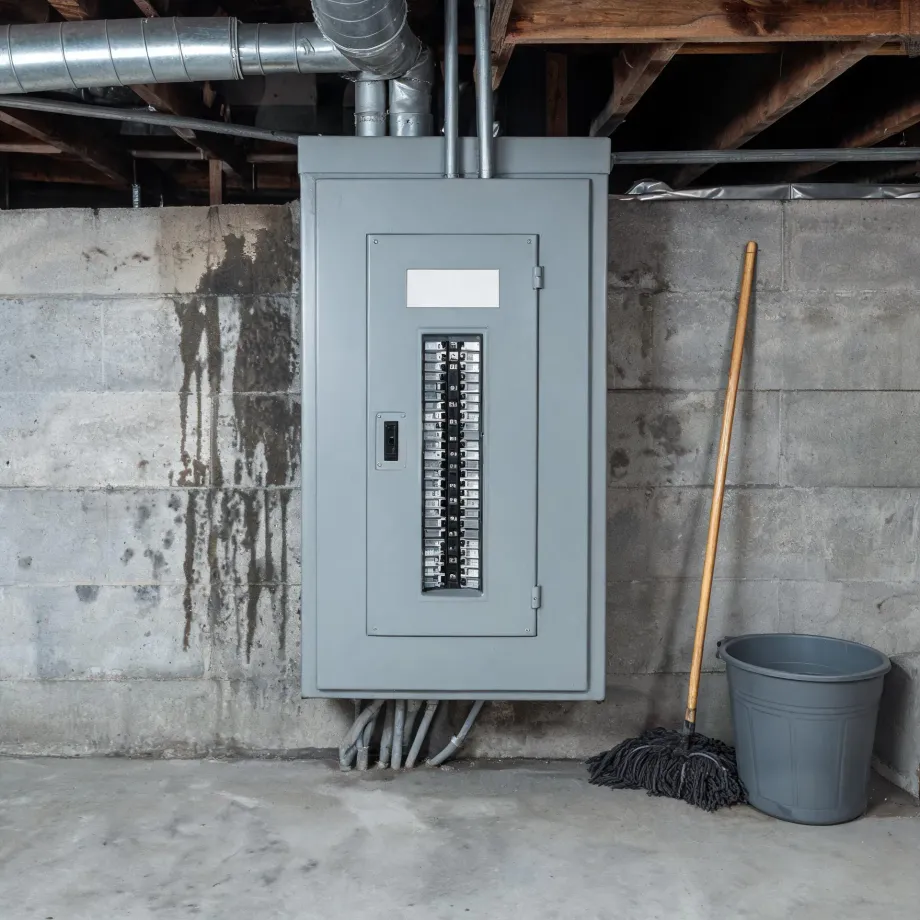
Ductwork in a house like this one has outlasted several furnaces already. Gaps at joints, settled insulation, and debris in runs are ordinary findings, and they are findings that change what a repair actually costs to do right. Half the homes in Wahkiakum County, Washington were built in 1978 or earlier (2020-2024 ACS 5-year). A contractor opening the furnace may find the unit itself is serviceable, then spend the rest of the visit tracing a fault back to a duct that has been leaking conditioned air for years.
The Parts of a Furnace a Contractor Checks First
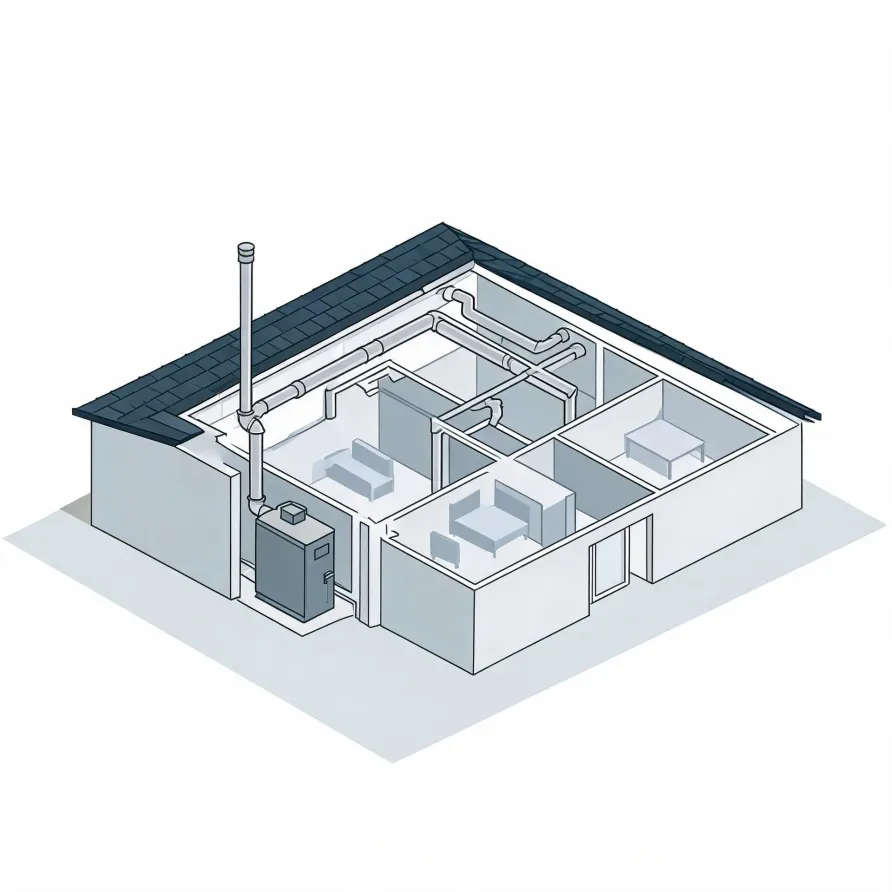
The furnace itself sits in the basement, utility room, or closet and is the piece a contractor goes to first. Inside it, the heat exchanger does the actual work of warming air, and a cracked or corroded exchanger is one of the most common reasons a furnace stops doing its job safely. The burners, which fire inside that exchanger, are checked closely when a homeowner reports weak heat or a unit that cycles on and off without finishing a run.
The blower motor and its fan wheel sit at the base of the furnace cabinet and push conditioned air into the duct system. The flue pipe runs from the top of the furnace to an exterior vent and carries combustion gases out of the house. The thermostat on the wall and the control board inside the cabinet are both part of what a contractor reads when the furnace is behaving unexpectedly, since either can send the wrong signal to every other part.
The drawing shows a typical furnace layout, and a licensed contractor will determine which components and connections apply to your specific system.
Find a contractor in Wahkiakum CountyWahkiakum County by the Numbers
5 severe weather events were recorded in Wahkiakum County, Washington between 2015 and 2024.
NOAA National Centers for Environmental Information, Storm Events Database, bulk CSV export, events 2015-01-01 through 2024-12-31.Half the homes in Wahkiakum County, Washington were built in 1978 or earlier (2020-2024 ACS 5-year).
U.S. Census Bureau, 2020-2024 American Community Survey 5-Year EstimatesWahkiakum County, Washington holds 2,250 housing units (2020-2024 ACS 5-year).
U.S. Census Bureau, 2020-2024 American Community Survey 5-Year EstimatesOwners occupy 83.2% of the occupied homes in Wahkiakum County, Washington (2020-2024 ACS 5-year).
U.S. Census Bureau, 2020-2024 American Community Survey 5-Year EstimatesCodes & Standards Covering Furnace Repair in Wahkiakum County, Washington5 sourced rules and standards
What the repair visit looks like
Non-weatherized gas furnaces manufactured on or after November 19, 2015 must reach 80.0 percent AFUE.
Non-weatherized oil-fired furnaces manufactured on or after November 19, 2015 must reach 83.0 percent AFUE.
Mobile home gas furnaces manufactured on or after November 19, 2015 must reach 80.0 percent AFUE.
Non-weatherized gas furnaces manufactured on or after December 18, 2028 must reach 95.0 percent AFUE, up from the 80.0 percent minimum that applies to units manufactured before that date.
What Wahkiakum County, Washington Requires for This Work
Washington requires contractor registration rather than an HVAC licence: every contractor must register with the Department of Labor and Industries, and advertising, bidding or working as a contractor without that registration is a gross misdemeanour.