Tell us about the job
Takes about a minute. No obligation.
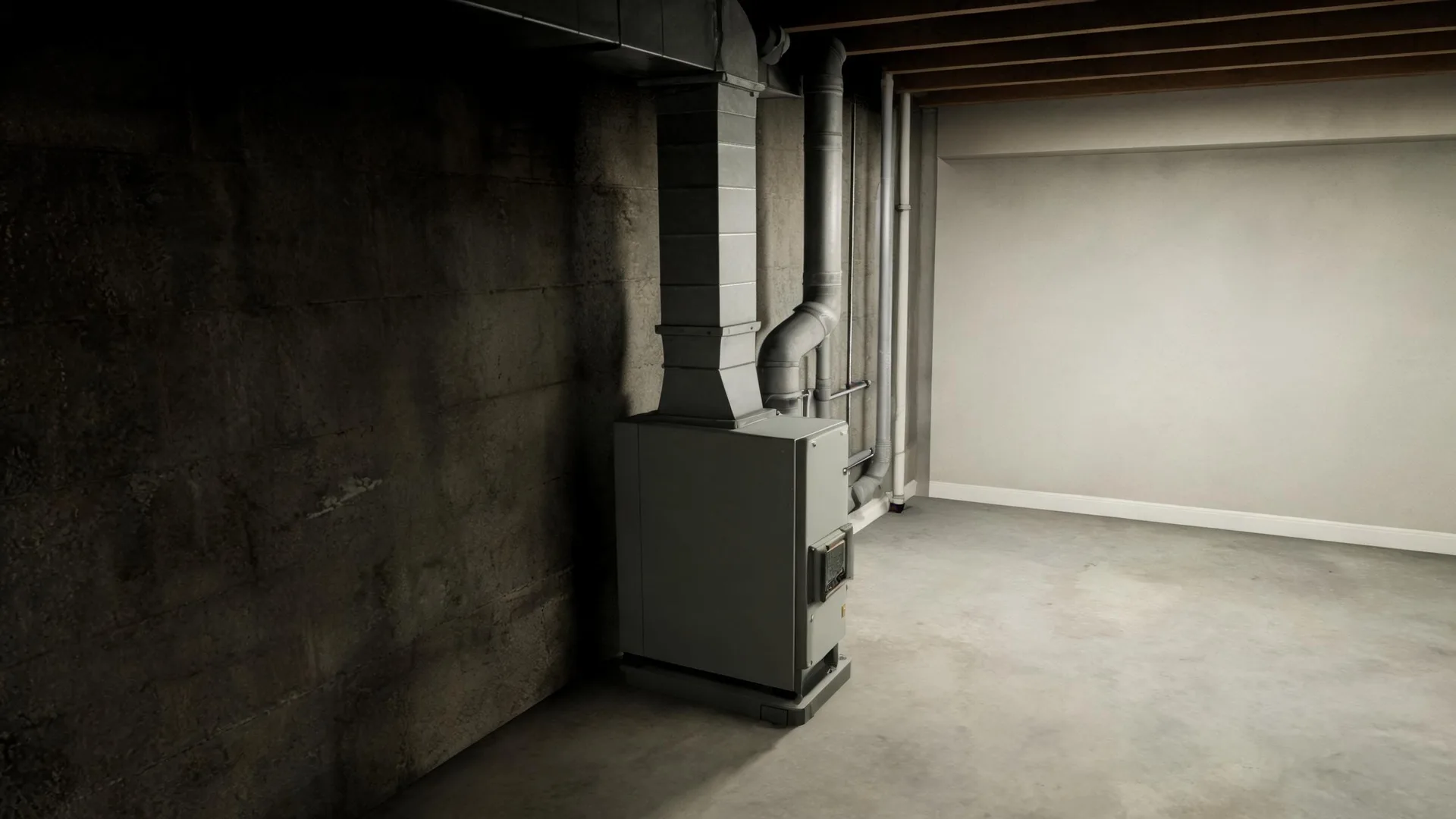
Sizing a furnace for this house is the first thing a contractor has to get right, because the burner and heat exchanger carry a workload here that leaves little room for an undersized system to hide. Homes in King County, WA run heat about ten months a year, from September through June. A furnace that is slightly too small for the load cycles harder and more frequently to hold temperature, and that additional cycling shows up in the ignition system and heat exchanger before it would in a milder climate. Duct leakage compounds the same problem: the blower runs longer on every call, and the distribution losses show up in fuel bills long before they show up in a service call.
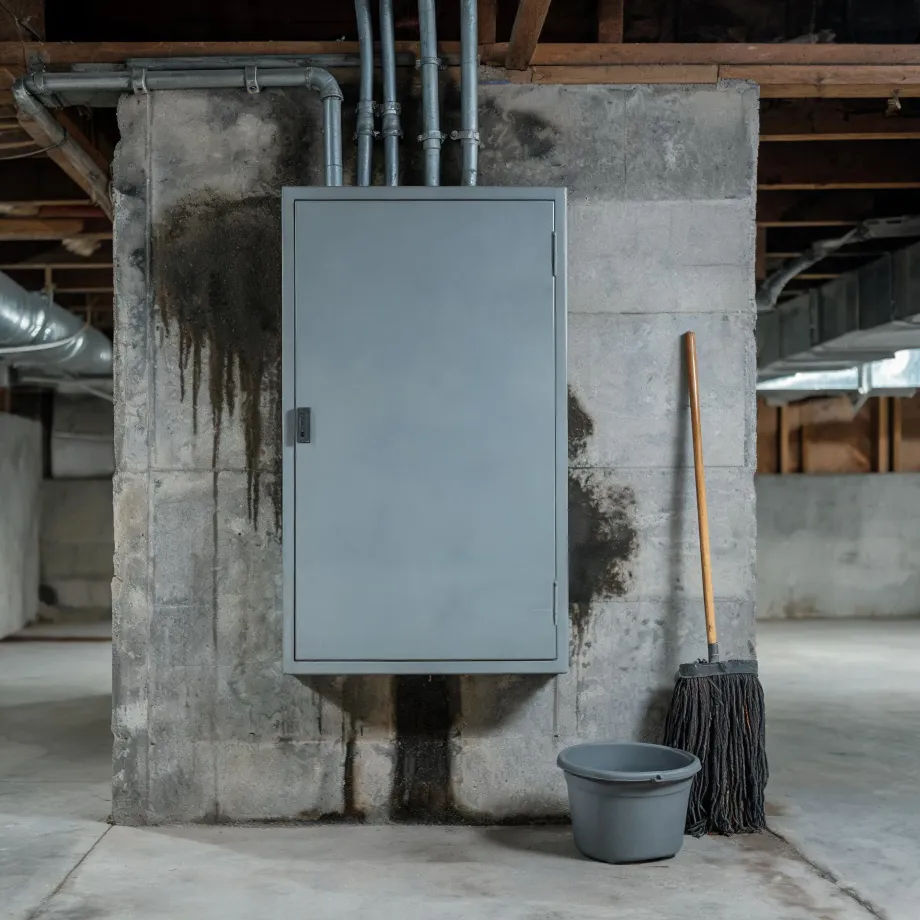
Ductwork laid down for a previous generation of heating equipment is what shapes a furnace installation here more than the unit itself does. Half the homes in King County, Washington were built in 1983 or earlier (2020-2024 ACS 5-year). A contractor quoting a new furnace has to determine whether the existing duct system moves enough air for a modern unit, and whether the static pressure the old layout creates will work against the new one. If the ducts are undersized or configured for a system with different airflow requirements, that gets resolved before the furnace is ever ordered.
What a Furnace Installation Covers
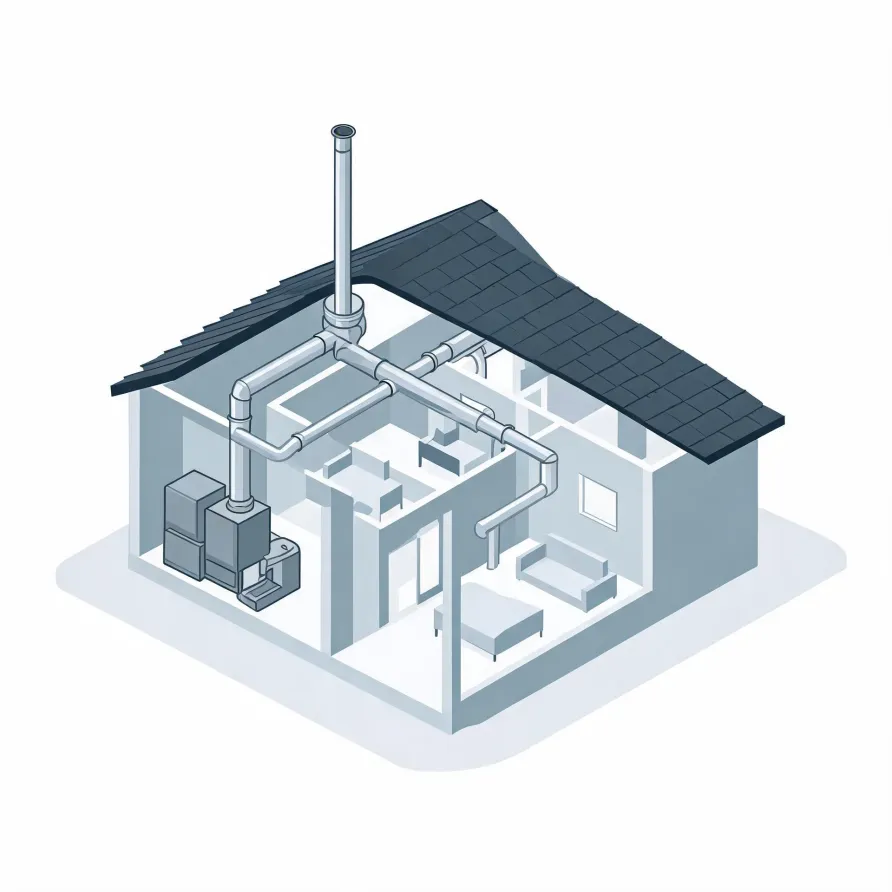
The furnace itself sits inside the house, most often in a basement, utility closet, or mechanical room. It is the unit that produces heat and pushes conditioned air into the duct system. A new installation also includes the flue or vent pipe that exits the house, carrying combustion gases out.
The thermostat mounts on an interior wall and tells the furnace when to run. The air handler components built into the furnace cabinet, including the blower motor and heat exchanger, are part of what a contractor puts in place, along with the filter housing where the return air enters the unit.
The drawing shows a typical layout, and a licensed contractor determines exactly what applies to this house.
Find a contractor in King CountyKing County, by the numbers
1 severe weather event was recorded in King County, Washington between 2015 and 2024.
NOAA National Centers for Environmental Information, Storm Events Database, bulk CSV export, events 2015-01-01 through 2024-12-31.Half the homes in King County, Washington were built in 1983 or earlier (2020-2024 ACS 5-year).
U.S. Census Bureau, 2020-2024 American Community Survey 5-Year EstimatesKing County, Washington holds 1,003,284 housing units (2020-2024 ACS 5-year).
U.S. Census Bureau, 2020-2024 American Community Survey 5-Year EstimatesOwners occupy 55.4% of the occupied homes in King County, Washington (2020-2024 ACS 5-year).
U.S. Census Bureau, 2020-2024 American Community Survey 5-Year EstimatesFurnace Installation Rules & Standards for King County, Washington5 sourced regulations and standards
What the installation actually looks like
Non-weatherized gas furnaces manufactured on or after November 19, 2015 must reach 80.0 percent AFUE.
Non-weatherized oil-fired furnaces manufactured on or after November 19, 2015 must reach 83.0 percent AFUE.
Mobile home gas furnaces manufactured on or after November 19, 2015 must reach 80.0 percent AFUE.
Non-weatherized gas furnaces manufactured on or after December 18, 2028 must reach 95.0 percent AFUE, up from the 80.0 percent minimum that applies to units manufactured before that date.
What King County, Washington Requires for HVAC Work
Washington requires contractor registration rather than an HVAC licence: every contractor must register with the Department of Labor and Industries, and advertising, bidding or working as a contractor without that registration is a gross misdemeanour.