Tell us about the job
Takes about a minute. No obligation.
Sizing a furnace for this house is a decision a contractor has to get right the first time. Homes in Walla Walla County, WA run heat about eight months a year, from October through May. The burner and heat exchanger cycle through most of the calendar, so a unit that is undersized, or sealed up with duct connections that restrict airflow, accumulates wear on those parts faster than the homeowner will notice until something fails. A contractor quoting a replacement here works out the actual load the house places on the system before settling on equipment, because an undersized box running long cycles does more damage to itself than one matched to the structure.
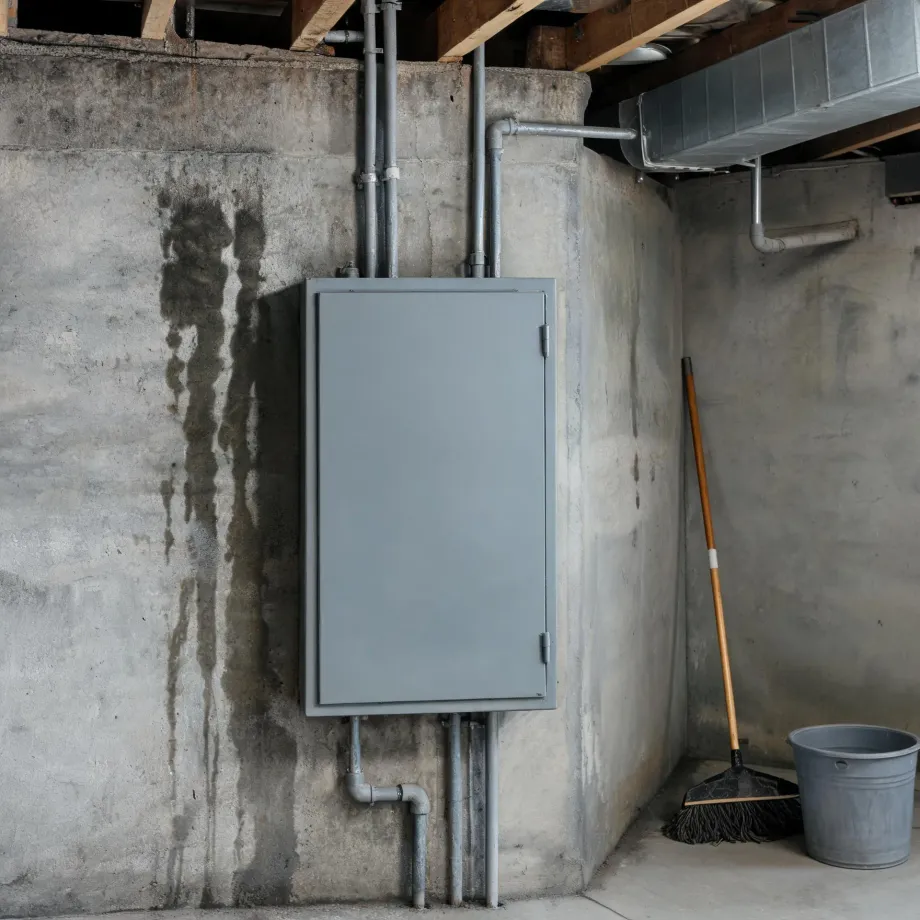
Ductwork laid out for one generation of equipment does not automatically serve the next. Half the homes in Walla Walla County, Washington were built in 1973 or earlier (2020-2024 ACS 5-year). A contractor installing a furnace in housing this age routinely finds duct runs sized and routed for whatever unit came before, and whether those runs deliver adequate airflow to every room is something that has to be measured, not assumed. The electrical panel gets the same look. If the existing service cannot handle the new load, that gets addressed before the furnace goes in.
What a Furnace Installation Covers
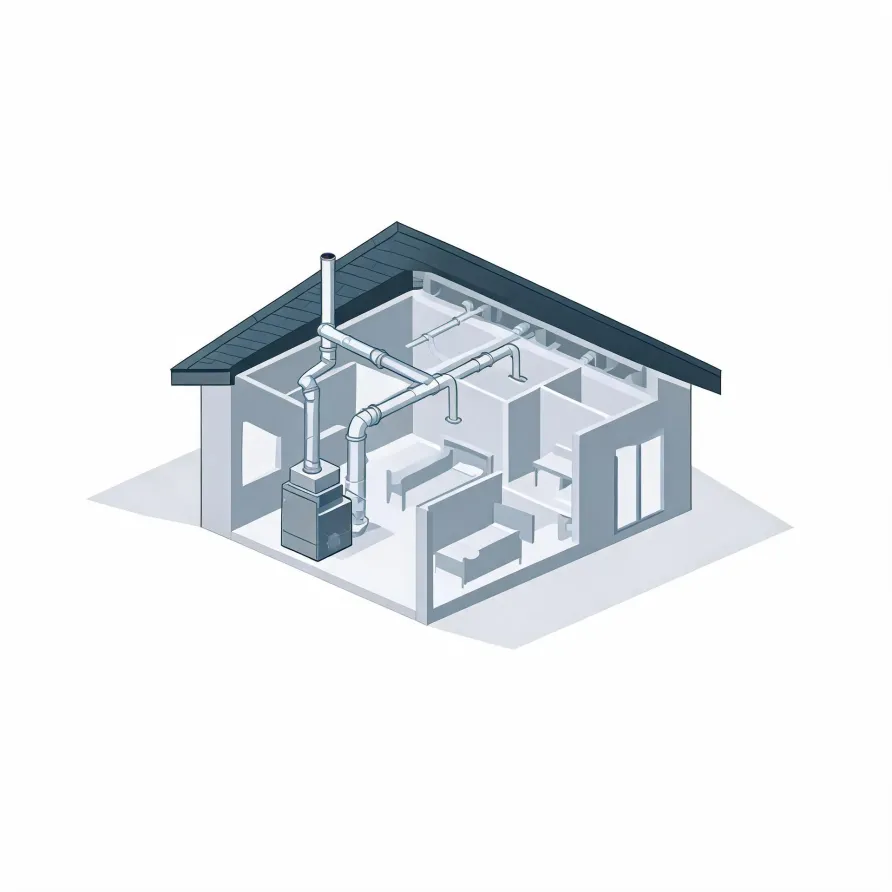
The furnace itself sits inside the house, most often in a basement, utility room, or closet. It is the central unit that produces heat and pushes conditioned air into the home. A new installation also includes the flue or venting pipe that runs from the furnace to an exterior wall or roofline, carrying combustion gases out.
The air handler components built into the furnace cabinet work alongside a thermostat mounted on a main living-area wall, which is the control point a homeowner uses day to day. A new installation also includes the filter housing where the return air enters the unit, and any disconnect or service switches a contractor positions near the cabinet for safe access.
The drawing shows a general layout of these components, and a licensed contractor determines exactly what applies to this house.
Find a contractor in Walla Walla CountyWalla Walla County, by the numbers
106 severe weather events were recorded in Walla Walla County, Washington between 2015 and 2024.
NOAA National Centers for Environmental Information, Storm Events Database, bulk CSV export, events 2015-01-01 through 2024-12-31.Half the homes in Walla Walla County, Washington were built in 1973 or earlier (2020-2024 ACS 5-year).
U.S. Census Bureau, 2020-2024 American Community Survey 5-Year EstimatesWalla Walla County, Washington holds 25,422 housing units (2020-2024 ACS 5-year).
U.S. Census Bureau, 2020-2024 American Community Survey 5-Year EstimatesOwners occupy 65.0% of the occupied homes in Walla Walla County, Washington (2020-2024 ACS 5-year).
U.S. Census Bureau, 2020-2024 American Community Survey 5-Year EstimatesFurnace & HVAC Installation Rules for Walla Walla County, Washington5 codes, standards & licenses
What the installation looks like from your end
Non-weatherized gas furnaces manufactured on or after November 19, 2015 must reach 80.0 percent AFUE.
Non-weatherized oil-fired furnaces manufactured on or after November 19, 2015 must reach 83.0 percent AFUE.
Mobile home gas furnaces manufactured on or after November 19, 2015 must reach 80.0 percent AFUE.
Non-weatherized gas furnaces manufactured on or after December 18, 2028 must reach 95.0 percent AFUE, up from the 80.0 percent minimum that applies to units manufactured before that date.
Licensing and Legal Requirements in Walla Walla County, Washington
Washington requires contractor registration rather than an HVAC licence: every contractor must register with the Department of Labor and Industries, and advertising, bidding or working as a contractor without that registration is a gross misdemeanour.
Severe Weather Events in Walla Walla County
What the weather does to a home's heating load shapes how hard a furnace has to work and for how long. Understanding local conditions is part of sizing and installing equipment that holds up in this area.
106 severe weather events, 2015–2024. Source: NOAA National Centers for Environmental Information, Storm Events Database.