Tell us about the job
Takes about a minute. No obligation.
A contractor quoting a furnace installation in Franklin County has to establish the full heating load before any equipment gets specified, because the burner and ignition system are cycling from the first cold snap in October and do not stop until late spring. Homes in Franklin County, WA run heat about eight months a year, from October through May. A furnace that is undersized, or installed with duct runs that restrict airflow, carries that deficit across every cycle for months on end. The heat exchanger and blower motor accumulate wear that a system with a shorter heating season would not see at the same age. Getting the sizing and installation right from the start is what separates a furnace that holds up from one that shows cracks and ignition failures while the warranty is still running.
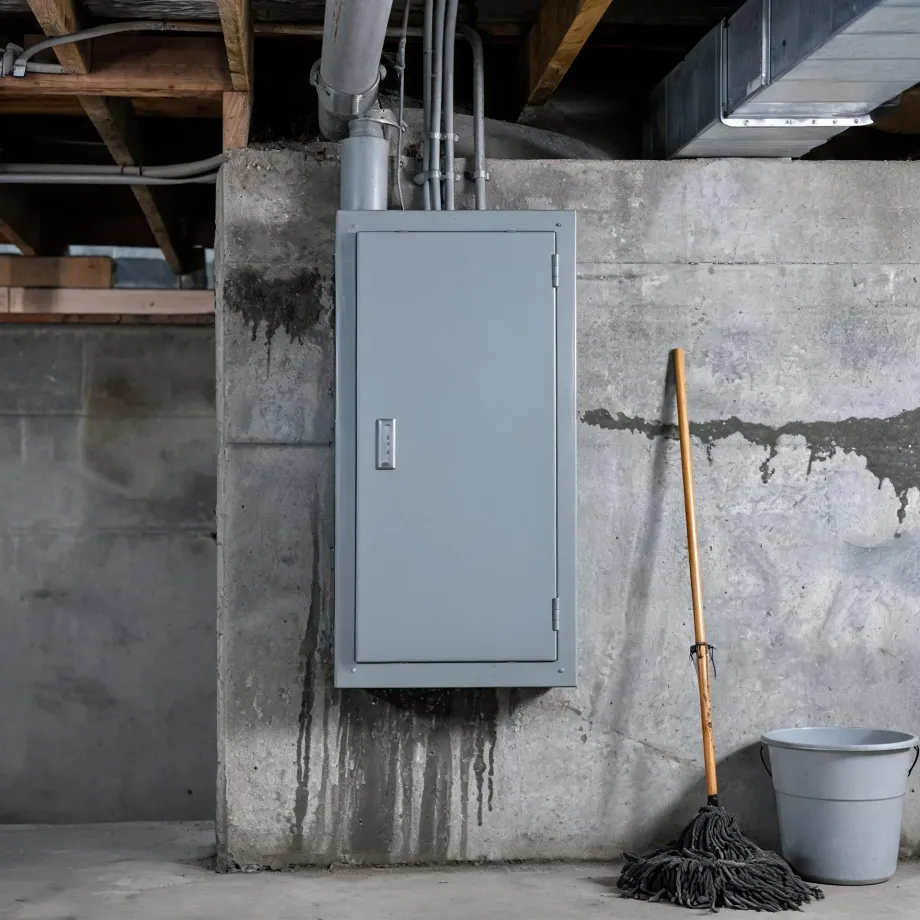
Ductwork built for an older furnace does not automatically carry a new one. The supply and return sizing that made sense for whatever was running then can restrict airflow enough to undermine a modern unit's output, and a contractor has to measure what is actually in the walls before a quote means anything. Half the homes in Franklin County, Washington were built in 1997 or earlier (2020-2024 ACS 5-year). That share of the housing stock was ducted for equipment that has since been replaced at least once, which means the duct layout a contractor finds today reflects decisions made for a system no longer in the house. Electrical service gets the same check: a new furnace with a variable-speed blower draws differently than what the panel was originally wired to handle.
What a Furnace Installation Covers
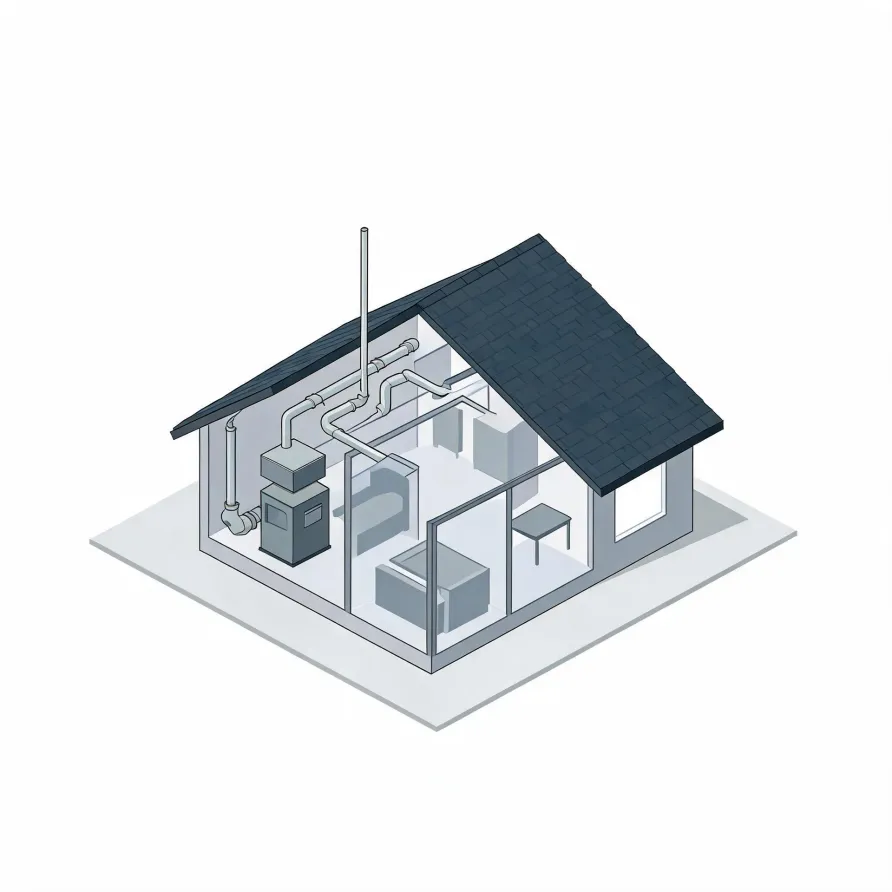
The furnace itself sits inside the house, most often in a basement, utility closet, or dedicated mechanical room. It is the central unit that burns fuel or uses electric resistance to produce heat, and everything else in the system connects back to it. The flue pipe runs from the furnace to an exterior wall or roof, carrying combustion gases out of the house.
The thermostat mounts on an interior wall where it can read the air temperature of the living space and signal the furnace to run. A filter housing sits at the air intake point, and the heat exchanger lives inside the furnace cabinet itself, separating combustion gases from the air that moves into the home. Each of these components is part of what a contractor accounts for during a new installation.
The drawing shows a general layout of these components, and a licensed contractor determines exactly what applies to your house and its existing setup.
Find a contractor in Franklin CountyFranklin County, Washington, by the numbers
40 severe weather events were recorded in Franklin County, Washington between 2015 and 2024.
NOAA National Centers for Environmental Information, Storm Events Database, bulk CSV export, events 2015-01-01 through 2024-12-31.Half the homes in Franklin County, Washington were built in 1997 or earlier (2020-2024 ACS 5-year).
U.S. Census Bureau, 2020-2024 American Community Survey 5-Year EstimatesFranklin County, Washington holds 31,183 housing units (2020-2024 ACS 5-year).
U.S. Census Bureau, 2020-2024 American Community Survey 5-Year EstimatesOwners occupy 71.0% of the occupied homes in Franklin County, Washington (2020-2024 ACS 5-year).
U.S. Census Bureau, 2020-2024 American Community Survey 5-Year EstimatesRules and Standards Behind Furnace Installation in Franklin County, Washington5 sourced rules and standards
What the Installation Actually Looks Like
Non-weatherized gas furnaces manufactured on or after November 19, 2015 must reach 80.0 percent AFUE.
Non-weatherized oil-fired furnaces manufactured on or after November 19, 2015 must reach 83.0 percent AFUE.
Mobile home gas furnaces manufactured on or after November 19, 2015 must reach 80.0 percent AFUE.
Non-weatherized gas furnaces manufactured on or after December 18, 2028 must reach 95.0 percent AFUE, up from the 80.0 percent minimum that applies to units manufactured before that date.
Licensing and Legal Requirements in Franklin County, Washington
Washington requires contractor registration rather than an HVAC licence: every contractor must register with the Department of Labor and Industries, and advertising, bidding or working as a contractor without that registration is a gross misdemeanour.
Severe Weather Events in Franklin County
Franklin County's climate puts real demands on heating equipment, and those demands are tied directly to how often and how hard local weather pushes a system to work. A furnace sized and installed for local conditions handles those loads differently than one spec'd for somewhere else.
40 severe weather events, 2015–2024. Source: NOAA National Centers for Environmental Information, Storm Events Database.