Tell us about the job
Takes about a minute. No obligation.
Homes in Douglas County, WA run heat about nine months a year, from September through May. The burner assembly and ignition system cycle every time the furnace fires, and a furnace that runs through that much of the calendar accumulates wear on those parts faster than on the cabinet or the blower housing. A contractor pulling a furnace apart here looks at the heat exchanger for fatigue cracks and at the igniter for brittleness before pricing anything else. Secondary components can wait; those two drive the repair decision.
Furnaces in a significant share of Douglas County homes have been replaced at least once since the house was built, which means what a contractor pulls apart is rarely the original system and rarely predictable from the outside. Half the homes in Douglas County, Washington were built in 1988 or earlier (2020-2024 ACS 5-year). A unit that looks serviceable can open to show a heat exchanger design whose replacement parts are no longer manufactured, or burner components that have been adapted to a cabinet they were not made for. That gap between the building and whatever is running in it now is where repair scopes get rewritten.
The Parts of a Furnace a Contractor Checks First
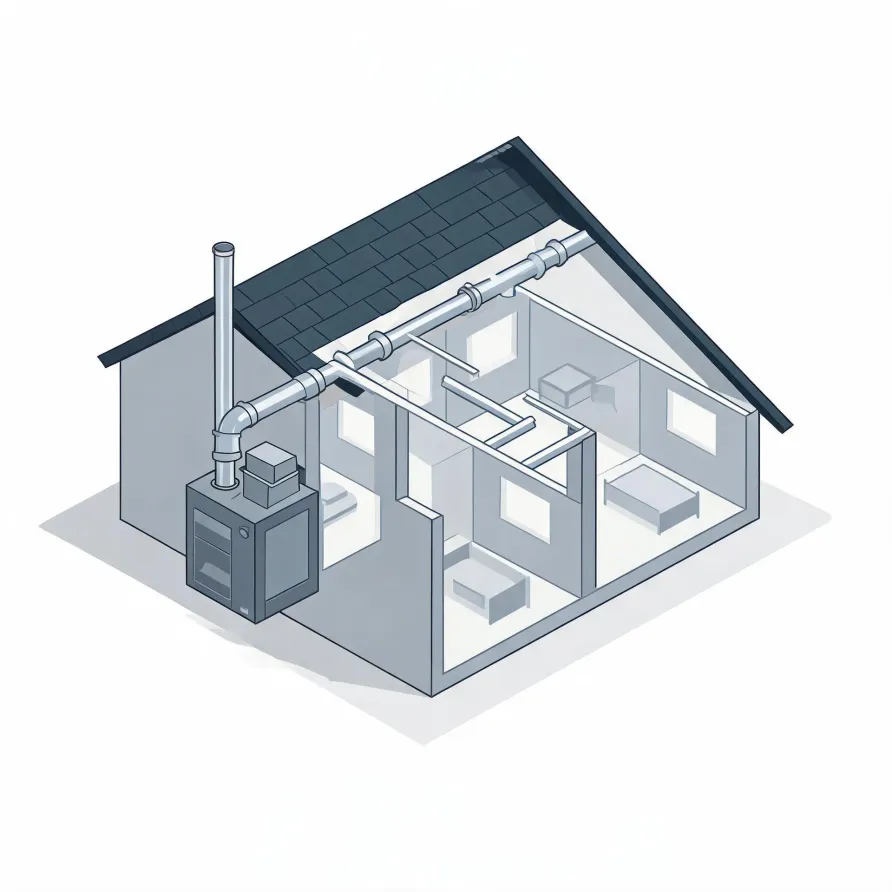
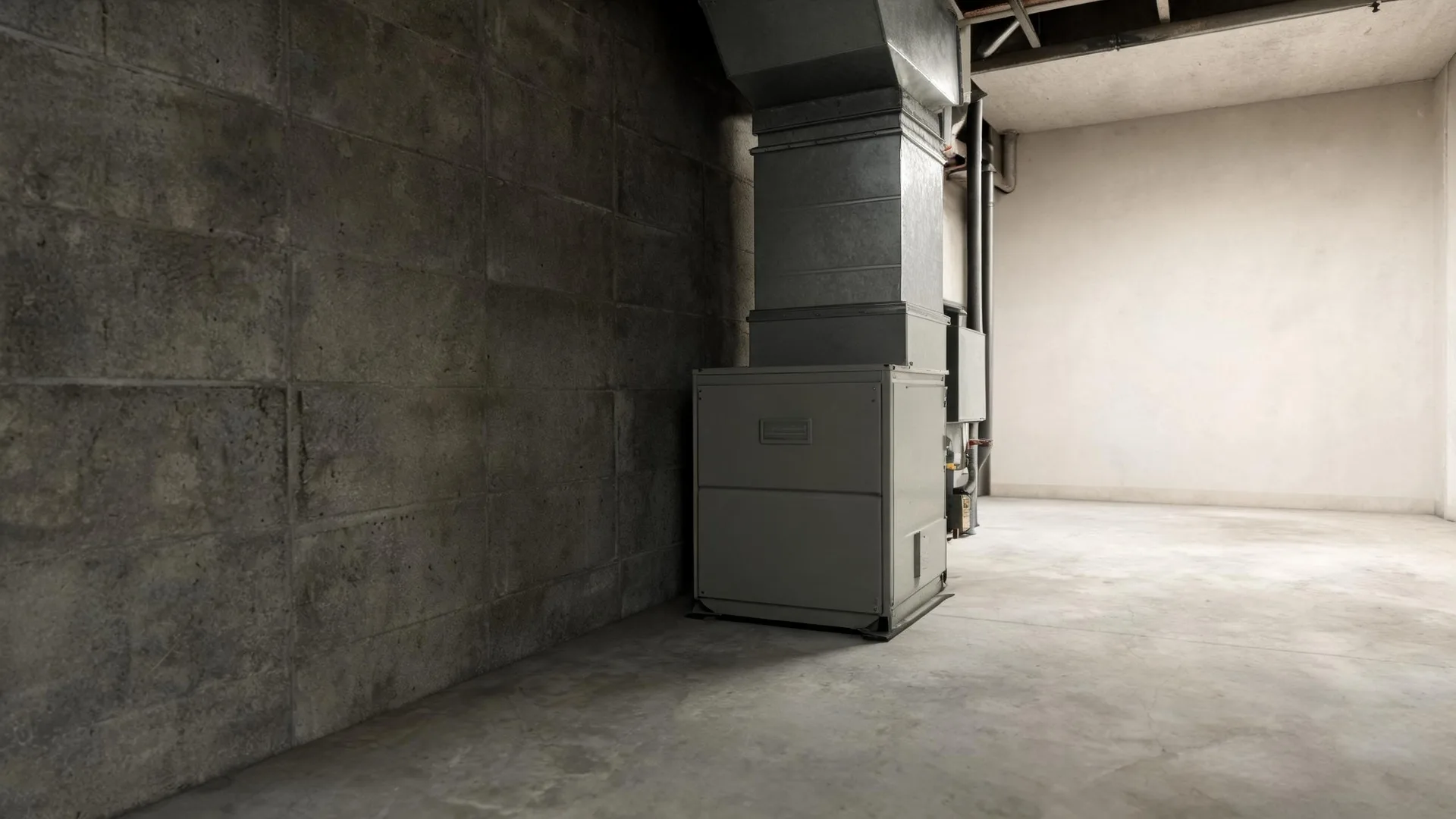
The furnace itself sits in a mechanical room, basement, or utility closet and is the piece most homeowners recognize. Inside it, the heat exchanger is the part a contractor looks at closely during a repair call, because cracks or corrosion there affect both performance and safety. The burners, igniter, and flame sensor all live inside that cabinet too, and any one of them can be the reason a furnace fails to start or shuts off too soon.
The blower motor sits at the base of the furnace and pushes conditioned air out through the supply side of the house. The flue pipe runs from the top of the unit through the wall or roof and carries exhaust gases out. A contractor also checks the control board and the thermostat wiring, since a fault in either one can mimic a mechanical failure.
The drawing shows a typical layout, and a licensed contractor determines what applies to the specific system in your home.
Find a contractor in Douglas CountyDouglas County, Washington, by the numbers
253 severe weather events were recorded in Douglas County, Washington between 2015 and 2024.
NOAA National Centers for Environmental Information, Storm Events Database, bulk CSV export, events 2015-01-01 through 2024-12-31.Half the homes in Douglas County, Washington were built in 1988 or earlier (2020-2024 ACS 5-year).
U.S. Census Bureau, 2020-2024 American Community Survey 5-Year EstimatesDouglas County, Washington holds 17,960 housing units (2020-2024 ACS 5-year).
U.S. Census Bureau, 2020-2024 American Community Survey 5-Year EstimatesOwners occupy 69.3% of the occupied homes in Douglas County, Washington (2020-2024 ACS 5-year).
U.S. Census Bureau, 2020-2024 American Community Survey 5-Year EstimatesFurnace Repair Rules and Codes for Douglas County, Washington5 sourced standards and regulations
What HVAC Repair Looks Like in Douglas County
Non-weatherized gas furnaces manufactured on or after November 19, 2015 must reach 80.0 percent AFUE.
Non-weatherized oil-fired furnaces manufactured on or after November 19, 2015 must reach 83.0 percent AFUE.
Mobile home gas furnaces manufactured on or after November 19, 2015 must reach 80.0 percent AFUE.
Non-weatherized gas furnaces manufactured on or after December 18, 2028 must reach 95.0 percent AFUE, up from the 80.0 percent minimum that applies to units manufactured before that date.
What Douglas County, Washington Requires for HVAC Work
Washington requires contractor registration rather than an HVAC licence: every contractor must register with the Department of Labor and Industries, and advertising, bidding or working as a contractor without that registration is a gross misdemeanour.
Severe Weather Events in Douglas County
Extreme weather puts real strain on heating equipment, cycling it hard through cold snaps and storms that push systems past normal operating loads. How much of that strain a furnace carries depends on where it runs, and Douglas County has its own weather record.
253 severe weather events, 2015–2024. Source: NOAA National Centers for Environmental Information, Storm Events Database.