Tell us about the job
Takes about a minute. No obligation.
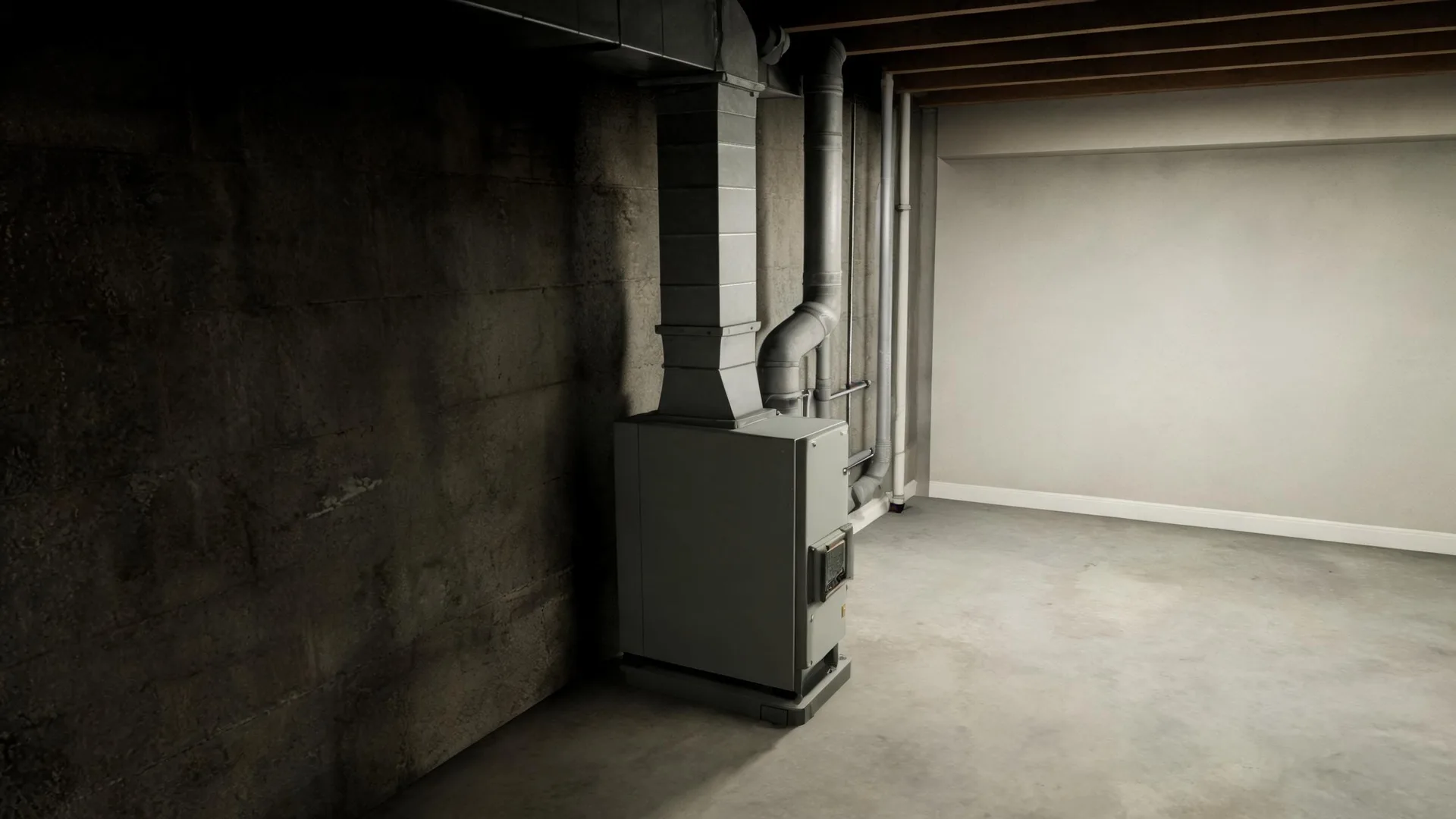
A furnace repair in Kittitas County starts with a contractor who has to account for how much the equipment has already been asked to do. Homes in Kittitas County, WA run heat about ten months a year, from September through June. The burner, heat exchanger, and ignition system cycle through that run with almost no extended off-season to slow wear. When a component fails, the failure usually reflects accumulated stress on parts that were never given time to sit idle. A contractor here checks those cycling components first, because that is where the load lands.
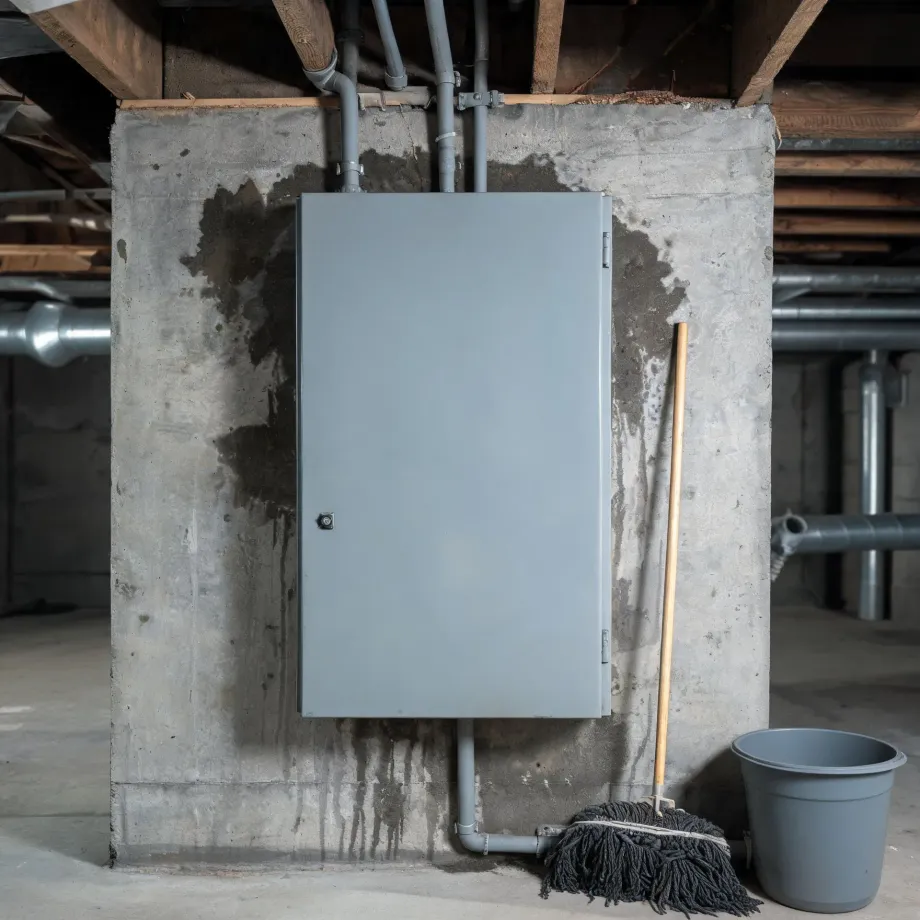
Furnaces in stock this old have usually outlasted at least one prior system, and the ductwork around them has been patched, rerouted, or left alone through each changeover. Half the homes in Kittitas County, Washington were built in 1993 or earlier (2020-2024 ACS 5-year). That history shows up inside the unit and inside the ducts when a contractor opens them: cracked heat exchangers, bypassed safeties, and debris that has settled through gaps in jointed sections over a long service life. A repair call here asks a contractor to work out which of those conditions is driving the fault, and what else in the system made it possible.
The Parts of a Furnace a Contractor Checks First
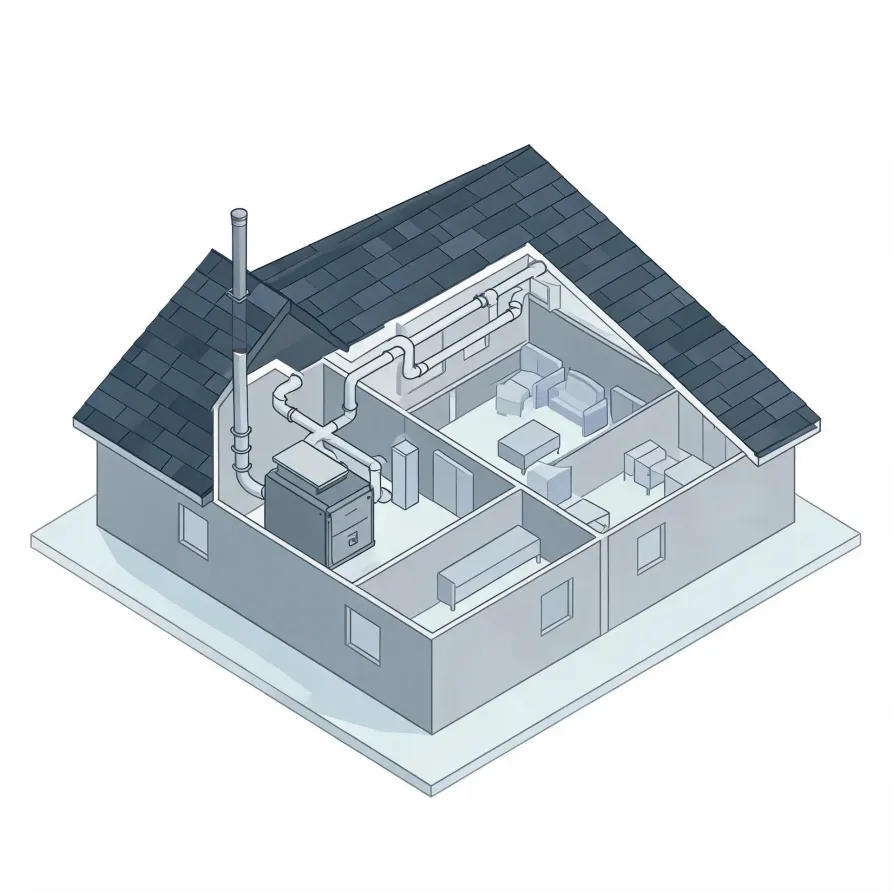
The furnace itself sits in a basement, utility room, or closet and is the piece a contractor goes to first. Inside it, the heat exchanger and burner assembly are the heart of the system. A cracked heat exchanger or a burner that will not fire cleanly accounts for a large share of furnace failures, so those components get a close look before anything else.
The blower motor pushes conditioned air out through the supply registers and sits inside the furnace cabinet. The flue pipe carries combustion gases out of the house and connects to the cabinet at the top or rear. The thermostat on the wall controls the whole sequence, and a wiring or sensor fault there can look exactly like a furnace problem until a contractor rules it out.
The drawing shows the general layout of a furnace system, and a licensed contractor determines what applies to your specific house and setup.
Find a contractor in Kittitas CountyKittitas County, by the numbers
31 severe weather events were recorded in Kittitas County, Washington between 2015 and 2024.
NOAA National Centers for Environmental Information, Storm Events Database, bulk CSV export, events 2015-01-01 through 2024-12-31.Half the homes in Kittitas County, Washington were built in 1993 or earlier (2020-2024 ACS 5-year).
U.S. Census Bureau, 2020-2024 American Community Survey 5-Year EstimatesKittitas County, Washington holds 24,674 housing units (2020-2024 ACS 5-year).
U.S. Census Bureau, 2020-2024 American Community Survey 5-Year EstimatesOwners occupy 61.5% of the occupied homes in Kittitas County, Washington (2020-2024 ACS 5-year).
U.S. Census Bureau, 2020-2024 American Community Survey 5-Year EstimatesCodes & Licensing for Furnace Repair in Kittitas County, Washington5 sourced rules and standards
What the repair visit looks like
Non-weatherized gas furnaces manufactured on or after November 19, 2015 must reach 80.0 percent AFUE.
Non-weatherized oil-fired furnaces manufactured on or after November 19, 2015 must reach 83.0 percent AFUE.
Mobile home gas furnaces manufactured on or after November 19, 2015 must reach 80.0 percent AFUE.
Non-weatherized gas furnaces manufactured on or after December 18, 2028 must reach 95.0 percent AFUE, up from the 80.0 percent minimum that applies to units manufactured before that date.
Licensing and Legal Requirements in Kittitas County, Washington
Washington requires contractor registration rather than an HVAC licence: every contractor must register with the Department of Labor and Industries, and advertising, bidding or working as a contractor without that registration is a gross misdemeanour.
Weather Stress on HVAC Equipment in Kittitas County
Extreme weather events put direct strain on heating systems, cycling equipment hard through temperature swings and power fluctuations that wear components faster than ordinary use. How much of that a furnace absorbs depends entirely on where it runs, which makes local weather history a real factor in what repair needs look like here.
31 severe weather events, 2015–2024. Source: NOAA National Centers for Environmental Information, Storm Events Database.