Tell us about the job
Takes about a minute. No obligation.
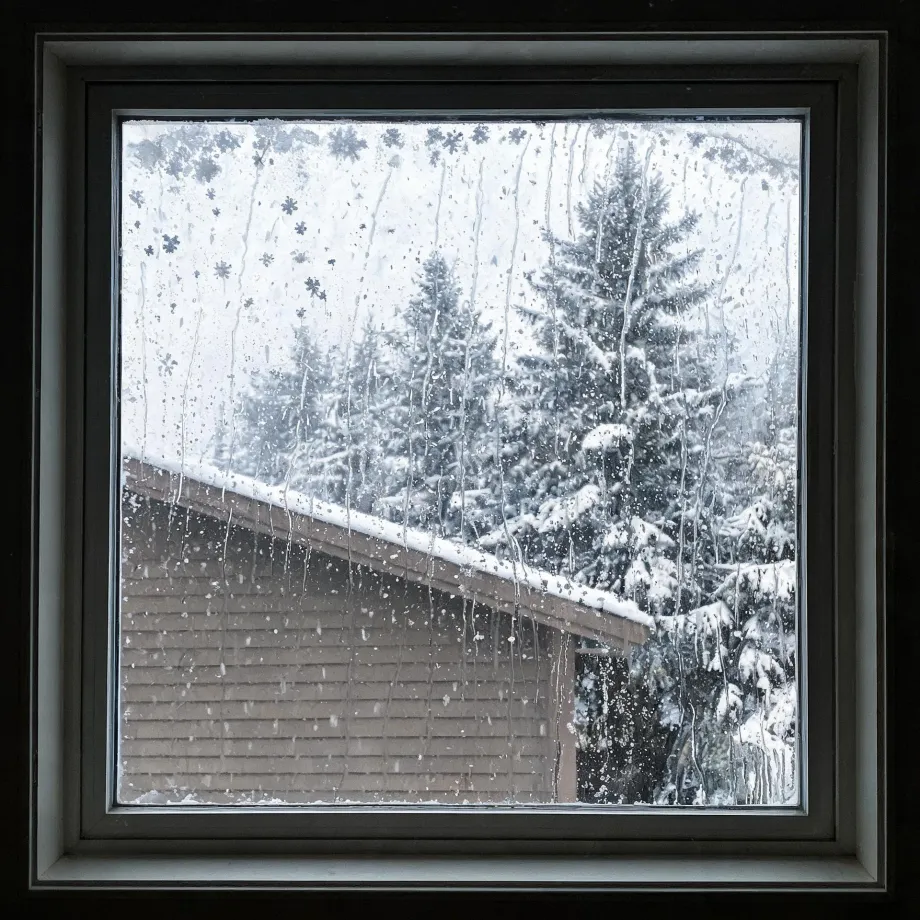
A furnace in this area earns its wear on the burner, the heat exchanger, and the ignition system, because those are the parts that cycle every time the equipment fires. Homes in Spokane County, WA run heat about ten months a year, from September through June. Each firing puts thermal stress on the heat exchanger and asks the igniter to strike again. A contractor pricing a repair here checks those components early, because deferred fatigue in them tends to produce the failure that finally brings a homeowner to call.
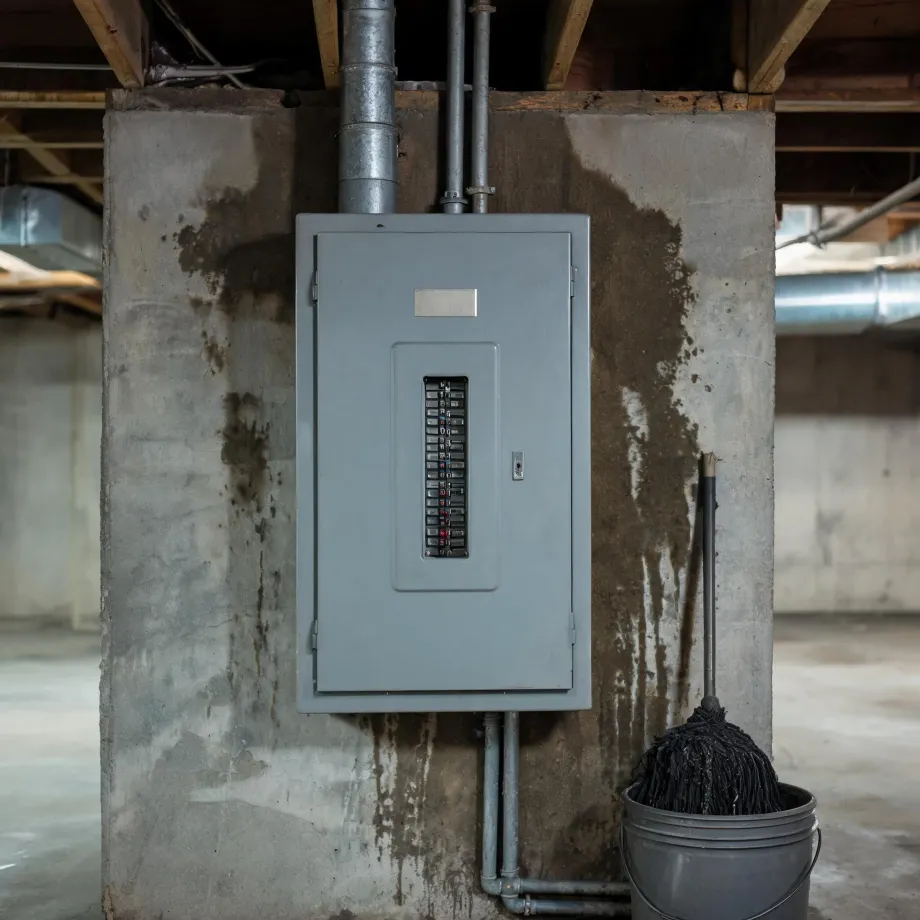
Furnace repair here runs into a specific obstacle: the parts a system takes. Half the homes in Spokane County, Washington were built in 1978 or earlier (2020-2024 ACS 5-year). A unit running in a house that old was often installed as a replacement itself, and whatever it replaced set the constraints it now operates under. When a contractor opens a furnace and identifies what failed, the next question is whether that part still ships. For systems of this vintage, the answer is not always yes, and that changes what the contractor recommends and what the repair bill looks like.
The Parts of a Furnace a Contractor Checks First
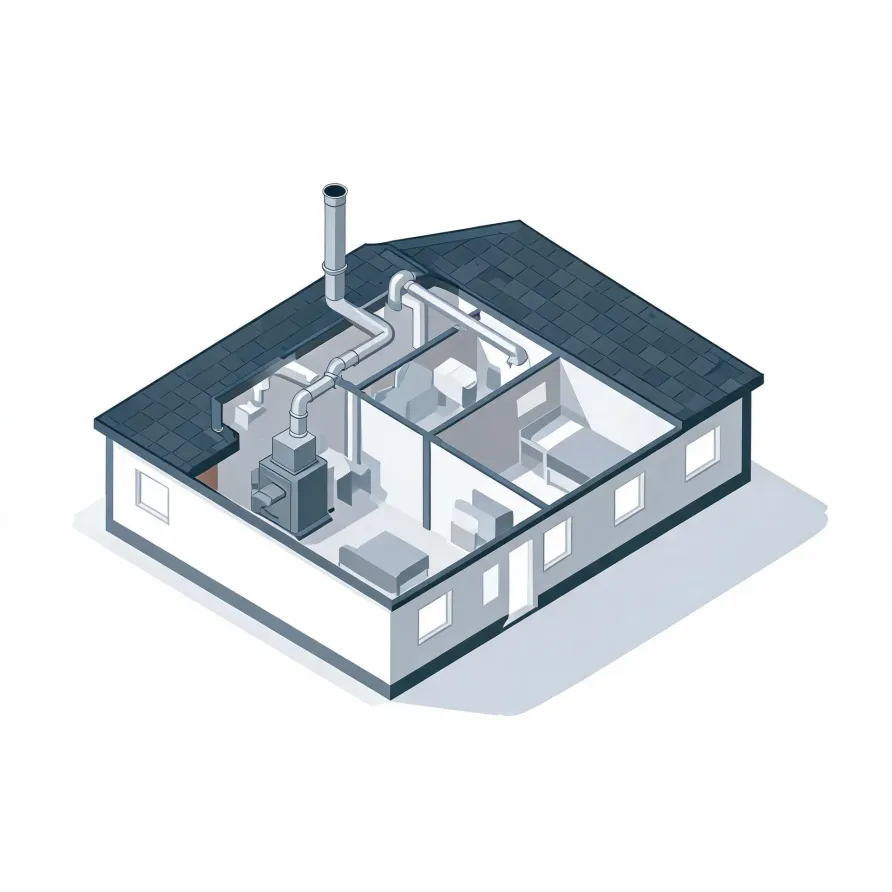
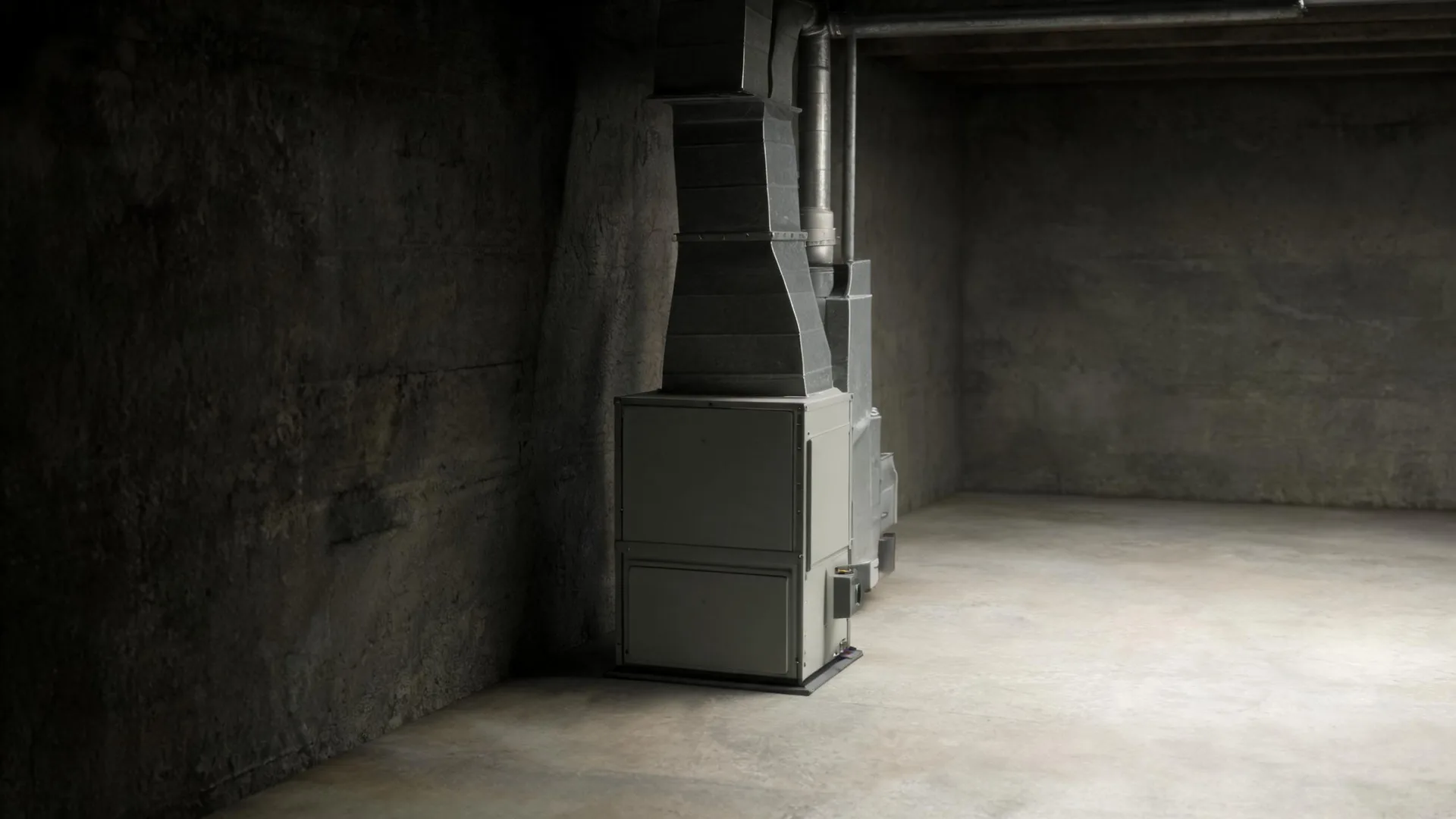
The furnace itself sits in a utility space, basement, or closet and is the unit that produces heat. Inside it, the heat exchanger, burners, and blower motor each carry part of that job. When a furnace stops heating, runs in short cycles, or makes noise it did not used to make, a contractor works through those internal components to find which one has failed.
The flue pipe runs from the furnace to an outside vent and carries combustion exhaust out of the house. The thermostat on a main wall tells the furnace when to fire and when to stop. The filter sits where return air enters the unit, and a clogged one puts strain on the blower and restricts airflow through the whole system.
The drawing shows a typical layout, and a licensed contractor determines what applies to this specific house and system.
Find a contractor in Spokane CountySpokane County, by the numbers
663 severe weather events were recorded in Spokane County, Washington between 2015 and 2024.
NOAA National Centers for Environmental Information, Storm Events Database, bulk CSV export, events 2015-01-01 through 2024-12-31.Half the homes in Spokane County, Washington were built in 1978 or earlier (2020-2024 ACS 5-year).
U.S. Census Bureau, 2020-2024 American Community Survey 5-Year EstimatesSpokane County, Washington holds 231,205 housing units (2020-2024 ACS 5-year).
U.S. Census Bureau, 2020-2024 American Community Survey 5-Year EstimatesOwners occupy 64.5% of the occupied homes in Spokane County, Washington (2020-2024 ACS 5-year).
U.S. Census Bureau, 2020-2024 American Community Survey 5-Year EstimatesFurnace Repair Rules on Record for Spokane County, Washington5 codes, standards & licenses
What the repair visit looks like
Non-weatherized gas furnaces manufactured on or after November 19, 2015 must reach 80.0 percent AFUE.
Non-weatherized oil-fired furnaces manufactured on or after November 19, 2015 must reach 83.0 percent AFUE.
Mobile home gas furnaces manufactured on or after November 19, 2015 must reach 80.0 percent AFUE.
Non-weatherized gas furnaces manufactured on or after December 18, 2028 must reach 95.0 percent AFUE, up from the 80.0 percent minimum that applies to units manufactured before that date.
Licensing and Legal Requirements in Spokane County, Washington
Washington requires contractor registration rather than an HVAC licence: every contractor must register with the Department of Labor and Industries, and advertising, bidding or working as a contractor without that registration is a gross misdemeanour.
Severe Weather Events in Spokane County
Harsh weather puts real load on furnace components, and that load builds year over year. How hard the equipment works in Spokane County shapes how often it needs repair and what breaks first.
663 severe weather events, 2015–2024. Source: NOAA National Centers for Environmental Information, Storm Events Database.