Tell us about the job
Takes about a minute. No obligation.
Homes in Lincoln County, WA run heat about ten months a year, from September through June. The burner and heat exchanger on a furnace here cycle through almost every month of the calendar, and that repeated start-stop load is where wear concentrates. A contractor diagnosing a furnace in Lincoln County checks those components before anything else, because the ignition system and heat exchanger surface are the first to show what the season has done. Cracks, scaling, and igniter fatigue show up in the opened unit. Secondary systems get looked at after.
Ducting sized and routed for a furnace that is long gone shapes what a contractor finds when something fails today. Half the homes in Lincoln County, Washington were built in 1972 or earlier (2020-2024 ACS 5-year). A furnace running in stock like this has often been swapped in around ductwork that was never reconfigured for it, which means a failed part is only the starting point. Once the system is open, a contractor is working out whether a replacement part fits what the house actually has, or whether the surrounding infrastructure has been quietly limiting the equipment's performance all along.
The Parts of a Furnace a Contractor Checks First
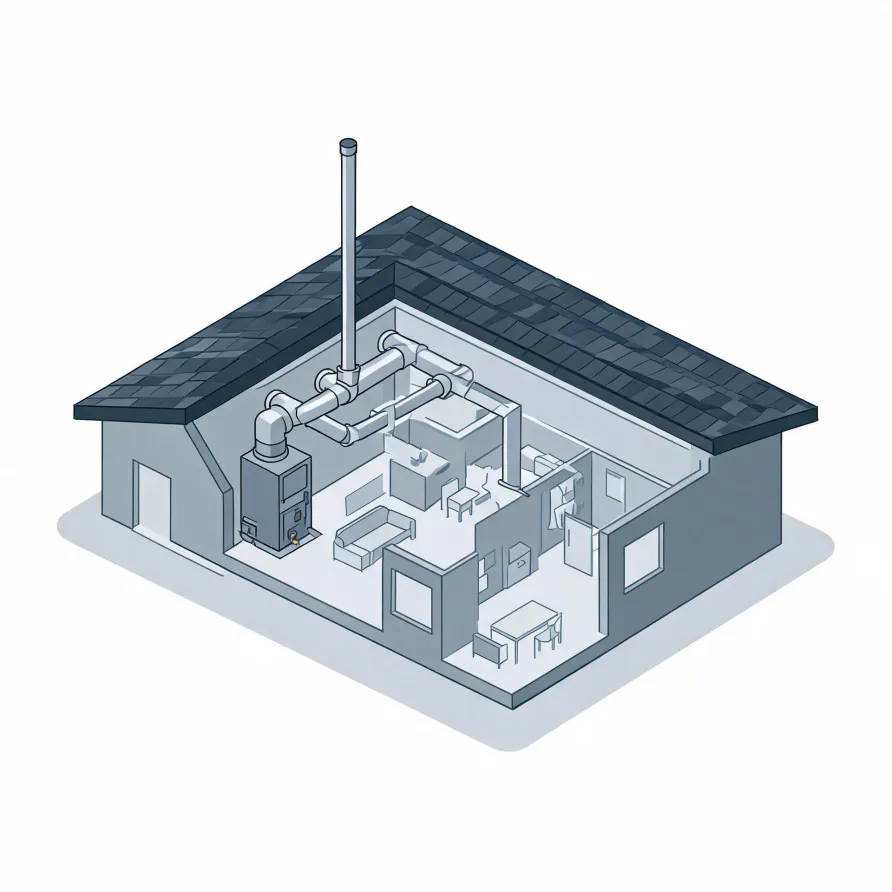
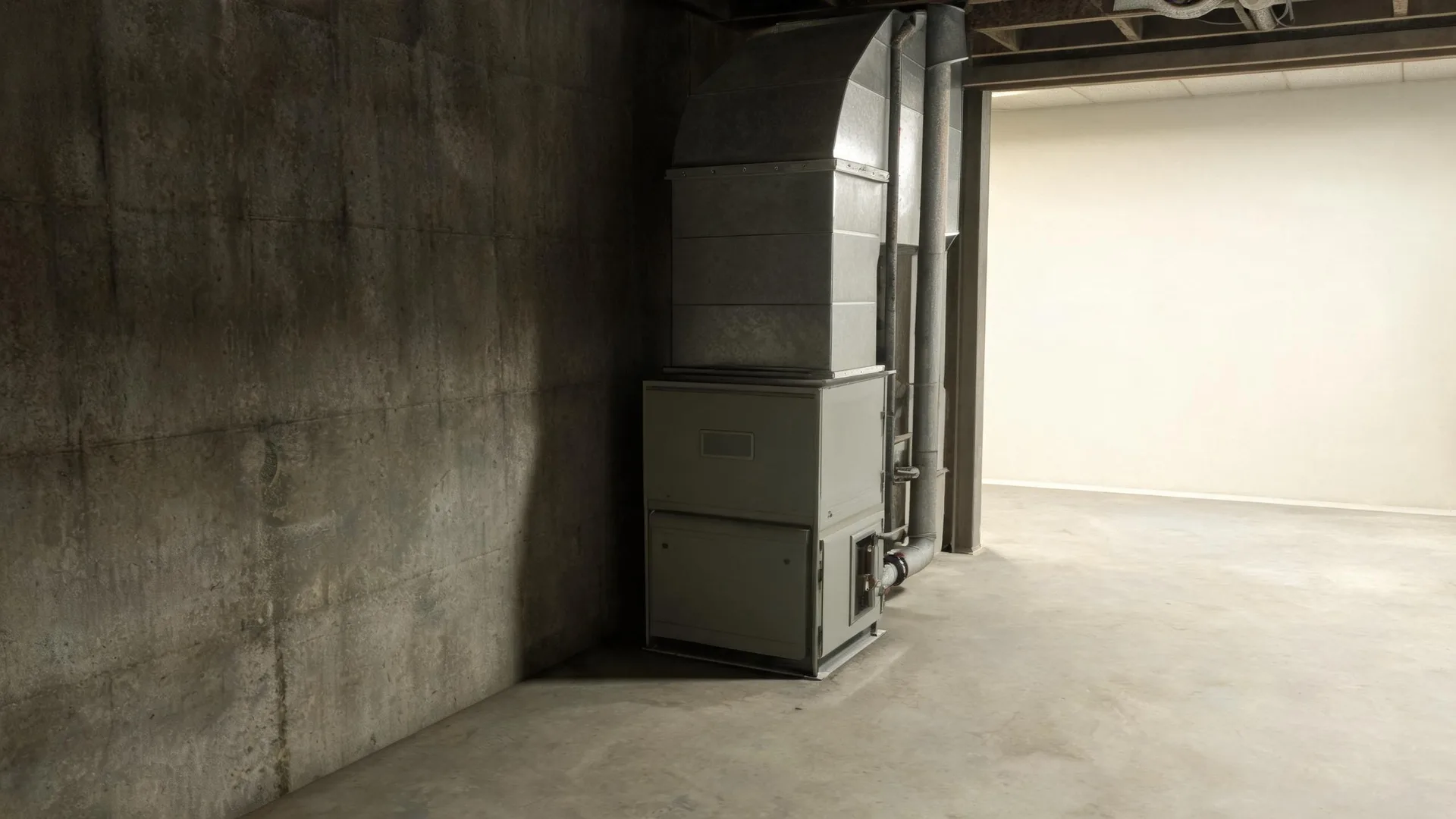
The furnace itself sits in a mechanical room, basement, or utility closet and is the piece a contractor goes to first. Inside it, the heat exchanger and burner assembly are the components most likely behind a heating failure. A cracked heat exchanger or a burner that will not stay lit explains a wide range of symptoms a homeowner notices before anything else.
The blower motor lives inside the furnace cabinet and pushes conditioned air out through the supply side of the house. The flue or venting runs from the cabinet to an exterior wall or roof and carries combustion gases out. The thermostat, mounted on a wall inside the living space, is where a contractor often starts before touching anything mechanical, since a wiring or calibration fault there can mimic a much larger problem.
The drawing shows the general layout of a furnace system, and a licensed contractor determines which components apply and what condition they are in for a specific home.
Find a contractor in Lincoln CountyLincoln County, Washington, by the numbers
276 severe weather events were recorded in Lincoln County, Washington between 2015 and 2024.
NOAA National Centers for Environmental Information, Storm Events Database, bulk CSV export, events 2015-01-01 through 2024-12-31.Half the homes in Lincoln County, Washington were built in 1972 or earlier (2020-2024 ACS 5-year).
U.S. Census Bureau, 2020-2024 American Community Survey 5-Year EstimatesLincoln County, Washington holds 5,918 housing units (2020-2024 ACS 5-year).
U.S. Census Bureau, 2020-2024 American Community Survey 5-Year EstimatesOwners occupy 80.4% of the occupied homes in Lincoln County, Washington (2020-2024 ACS 5-year).
U.S. Census Bureau, 2020-2024 American Community Survey 5-Year EstimatesCodes & Standards Covering Furnace Repair in Lincoln County, Washington5 sourced rules and standards
What happens when a contractor comes out
Non-weatherized gas furnaces manufactured on or after November 19, 2015 must reach 80.0 percent AFUE.
Non-weatherized oil-fired furnaces manufactured on or after November 19, 2015 must reach 83.0 percent AFUE.
Mobile home gas furnaces manufactured on or after November 19, 2015 must reach 80.0 percent AFUE.
Non-weatherized gas furnaces manufactured on or after December 18, 2028 must reach 95.0 percent AFUE, up from the 80.0 percent minimum that applies to units manufactured before that date.
Licensing and Legal Requirements in Lincoln County, Washington
Washington requires contractor registration rather than an HVAC licence: every contractor must register with the Department of Labor and Industries, and advertising, bidding or working as a contractor without that registration is a gross misdemeanour.
Severe Weather Events in Lincoln County
Hard weather puts real hours on a furnace. Stress that builds up over years of weather like this is what drives repair calls in Lincoln County, which is why local conditions belong on a page about furnace work.
276 severe weather events, 2015–2024. Source: NOAA National Centers for Environmental Information, Storm Events Database.