Tell us about the job
Takes about a minute. No obligation.
Homes in Ferry County, WA run heat about ten months a year, from September through June. A furnace cycling through that kind of season puts the ignition system, burner, and heat exchanger under load that adds up year over year. When a unit starts misfiring or failing to light, a contractor working a repair in Ferry County checks the igniter and flame sensor first. Those parts cycle every time the burner fires, and a long heating season drives that count high. The heat exchanger gets attention too, but the ignition system is where wear shows up earliest and most predictably here.
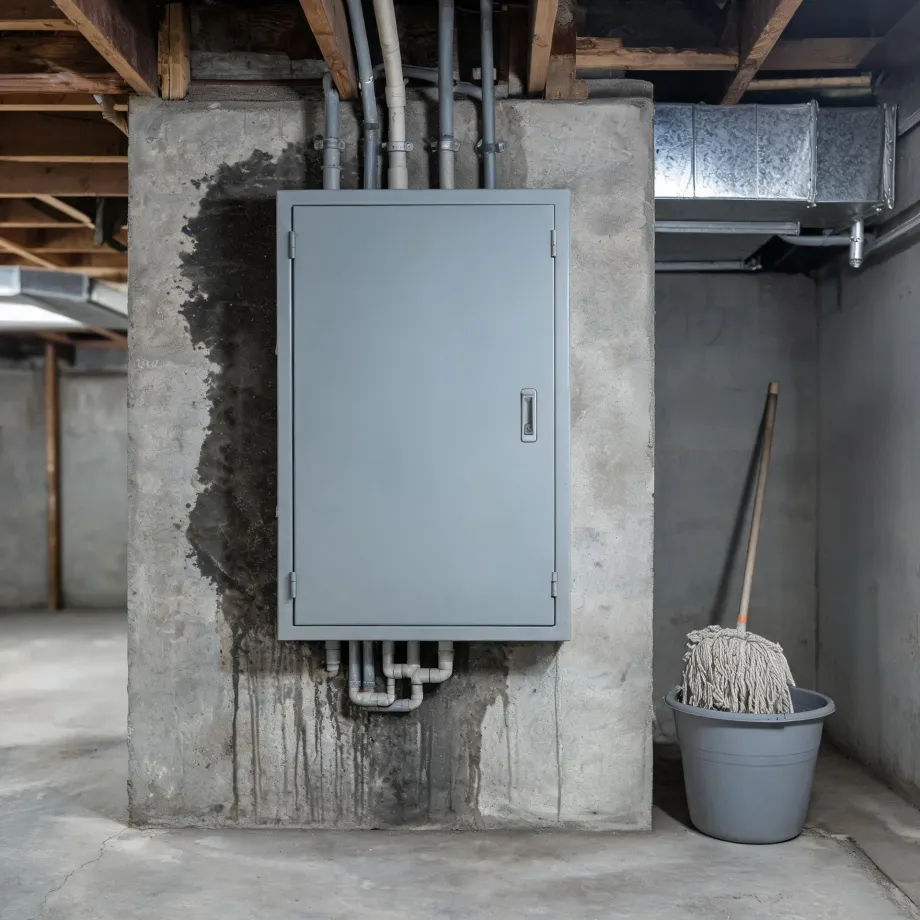
Half the homes in Ferry County, Washington were built in 1985 or earlier (2020-2024 ACS 5-year). For a furnace repair, that matters because houses in this range of the stock were built around heating equipment that has since been replaced, sometimes more than once, and each replacement round narrows the field of available parts. When a contractor opens a furnace here, the question driving the repair is whether the manufacturer still makes what the unit takes. If the answer is no, the job changes scope before any fix is attempted.
The Parts of a Furnace a Contractor Checks First
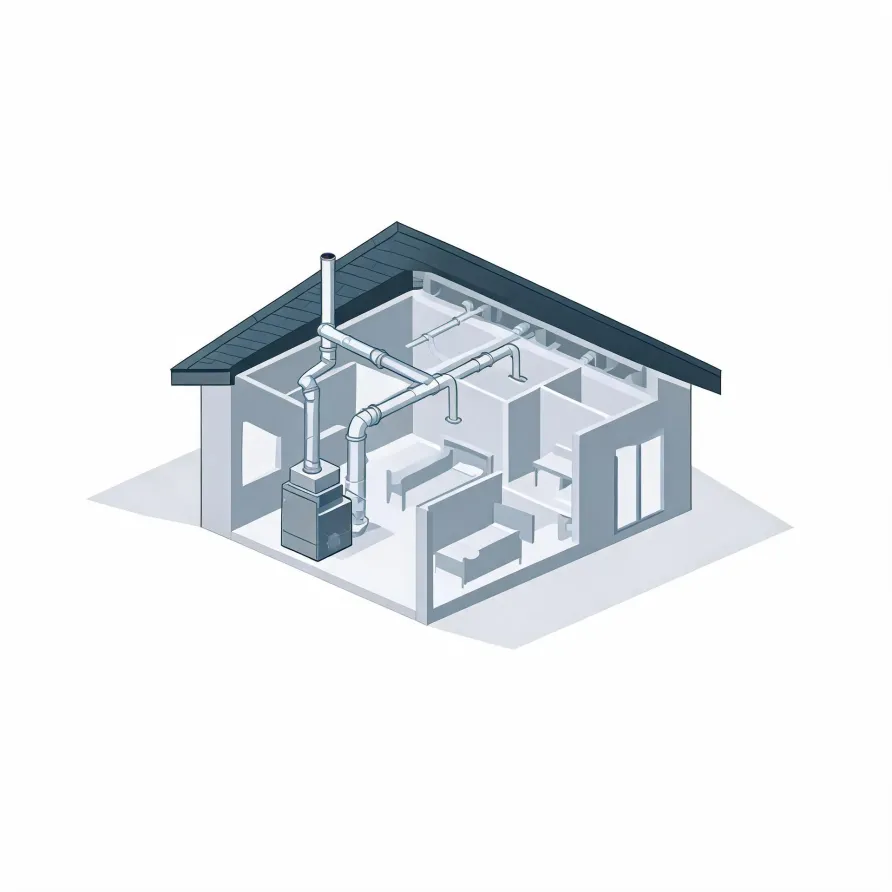
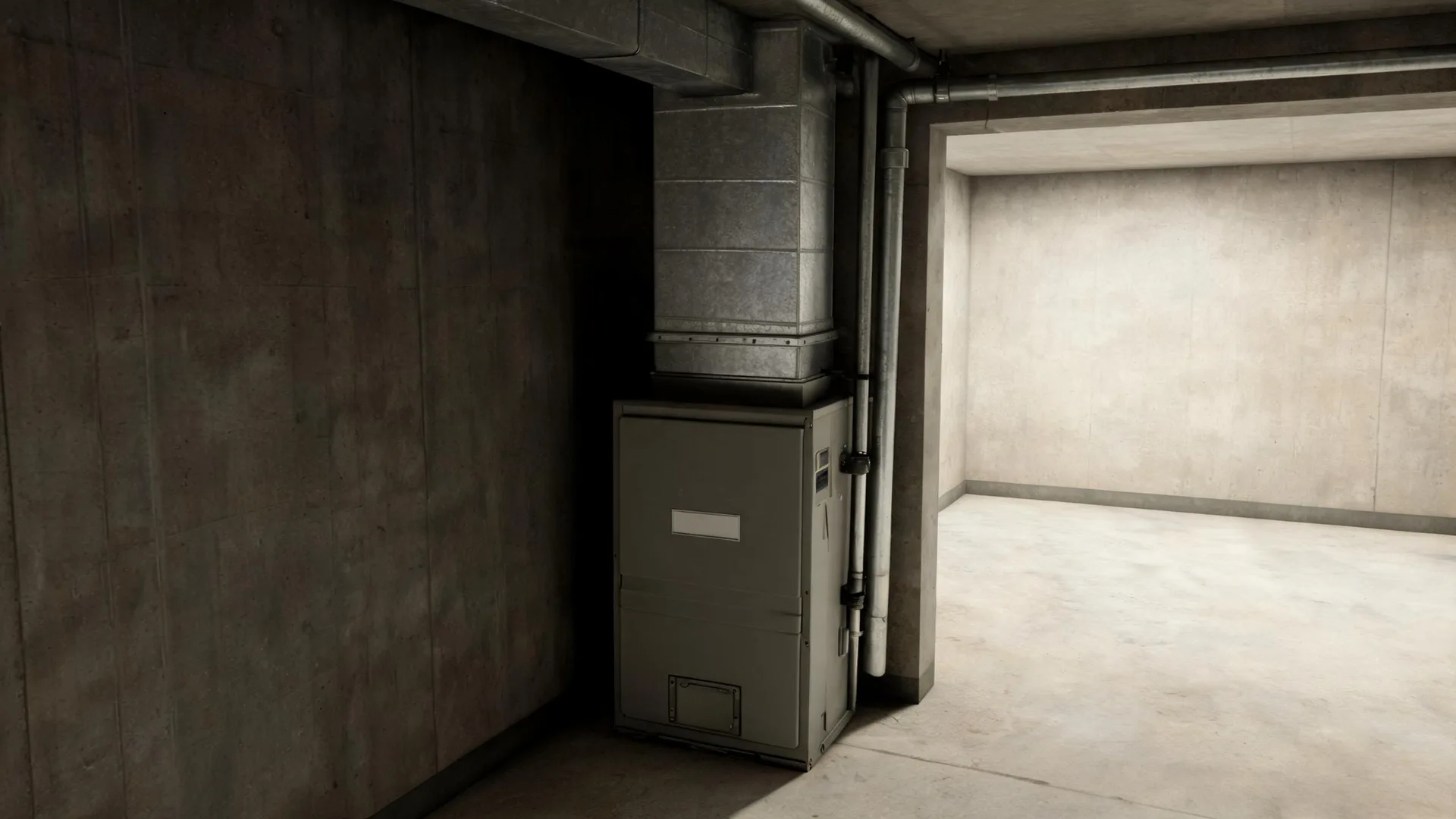
The furnace itself sits in a utility space, basement, or closet and is the piece a contractor goes to first. Inside it, the heat exchanger, burners, and blower motor each have a distinct job, and a fault in any one of them shows up differently. A cracked heat exchanger, a misfiring burner, and a failing blower motor each produce their own set of symptoms, so a contractor reads those symptoms before opening anything up.
The flue pipe runs from the furnace to an exterior wall or up through the roof and carries combustion gases out of the house. Alongside the furnace sits the filter housing, and near it the gas valve and igniter control the fuel supply and the spark that lights it. These pieces connect the system and are common stops in any repair diagnosis.
The drawing shows the general layout of a furnace system, and a licensed contractor determines what applies to this particular house.
Find a contractor in Ferry CountyFerry County, Washington, by the numbers
131 severe weather events were recorded in Ferry County, Washington between 2015 and 2024.
NOAA National Centers for Environmental Information, Storm Events Database, bulk CSV export, events 2015-01-01 through 2024-12-31.Half the homes in Ferry County, Washington were built in 1985 or earlier (2020-2024 ACS 5-year).
U.S. Census Bureau, 2020-2024 American Community Survey 5-Year EstimatesFerry County, Washington holds 4,117 housing units (2020-2024 ACS 5-year).
U.S. Census Bureau, 2020-2024 American Community Survey 5-Year EstimatesOwners occupy 78.1% of the occupied homes in Ferry County, Washington (2020-2024 ACS 5-year).
U.S. Census Bureau, 2020-2024 American Community Survey 5-Year EstimatesCodes & Standards for Furnace Repair in Ferry County, Washington5 sourced rules & standards
What HVAC Repair Looks Like in Ferry County
Non-weatherized gas furnaces manufactured on or after November 19, 2015 must reach 80.0 percent AFUE.
Non-weatherized oil-fired furnaces manufactured on or after November 19, 2015 must reach 83.0 percent AFUE.
Mobile home gas furnaces manufactured on or after November 19, 2015 must reach 80.0 percent AFUE.
Non-weatherized gas furnaces manufactured on or after December 18, 2028 must reach 95.0 percent AFUE, up from the 80.0 percent minimum that applies to units manufactured before that date.
Licensing and Legal Requirements in Ferry County, Washington
Washington requires contractor registration rather than an HVAC licence: every contractor must register with the Department of Labor and Industries, and advertising, bidding or working as a contractor without that registration is a gross misdemeanour.
Weather Stress on HVAC Equipment in Ferry County
Heating equipment works harder when the weather outside pushes toward extremes, and that load shows up in wear, breakdowns, and repair calls. How much strain a furnace takes is a local question, and the pattern of severe weather in Ferry County is part of what shapes it.
131 severe weather events, 2015–2024. Source: NOAA National Centers for Environmental Information, Storm Events Database.